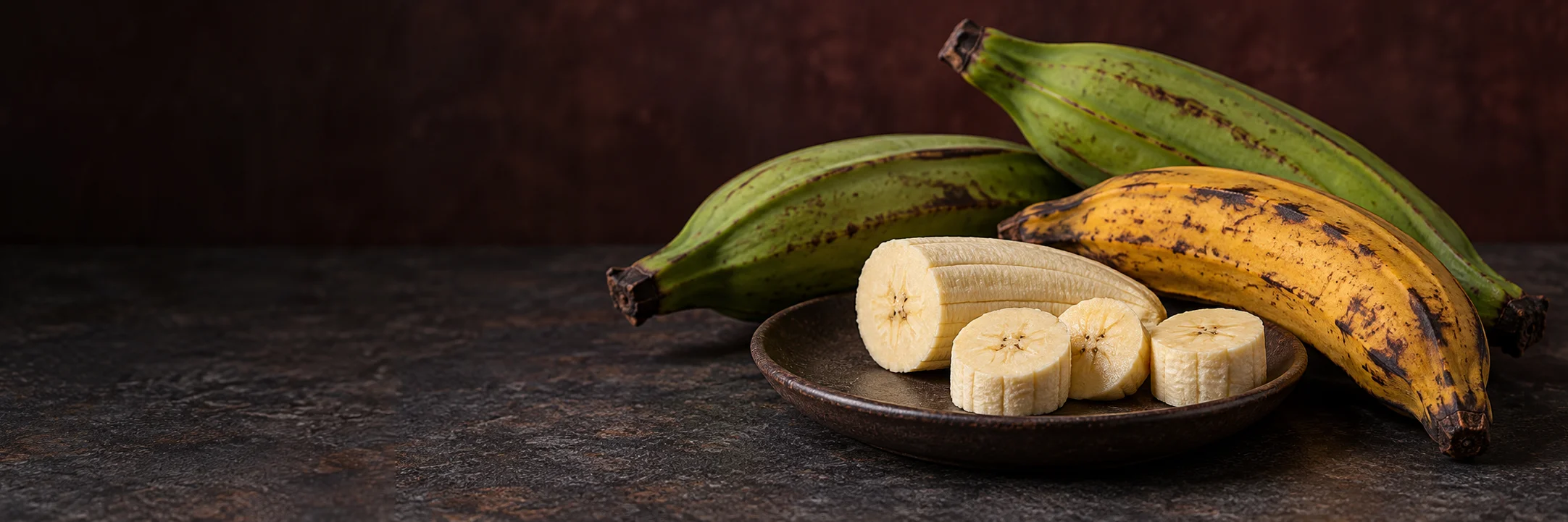
Most monitored plantain is low in metals, but lead is the one to check: plantain grown beside mining-polluted rivers in Ghana averaged about 1,000 µg/kg, far above the 100 µg/kg fruit limit.1GEMS/Food Contaminants database heavy-metal exportsGEMS/Food Contamination Monitoring and Assessment ProgrammeRead source →2Effect of home processing methods on the levels of heavy metal contaminants in four food crops grown in and around two mining towns in GhanaToxicology Reports 8 (2021) 1830–1838Read source →3Commission Regulation (EU) 2023/915 of 25 April 2023 on maximum levels for certain contaminants in food and repealing Regulation (EC) No 1881/2006Official Journal of the European UnionRead source →
-
Metals of concern:
Lead decides most plantain questions; mercury matters near gold mining, and nickel is high wherever measured.2Effect of home processing methods on the levels of heavy metal contaminants in four food crops grown in and around two mining towns in GhanaToxicology Reports 8 (2021) 1830–1838Read source →4Accumulation of Heavy Metals and Metalloid in Foodstuffs from Agricultural Soils around Tarkwa Area in Ghana, and Associated Human Health RisksInternational Journal of Environmental Research and Public Health (2015)Read source →5Heavy metals health risk assessment for population via consumption of food crops and fruits in Owerri, South Eastern, NigeriaChemistry Central Journal 2012, 6:77Read source →
-
Main drivers:
Farm location near mining and polluted river water, and ripening with calcium carbide, which raised arsenic in one study.2Effect of home processing methods on the levels of heavy metal contaminants in four food crops grown in and around two mining towns in GhanaToxicology Reports 8 (2021) 1830–1838Read source →4Accumulation of Heavy Metals and Metalloid in Foodstuffs from Agricultural Soils around Tarkwa Area in Ghana, and Associated Human Health RisksInternational Journal of Environmental Research and Public Health (2015)Read source →6Effects of Chemical Ripening With Calcium Carbide on Nutritional Composition, Antioxidant Capacity and Heavy Metal Accumulation in Climacteric FruitsInternational Journal of Food Science 2026:7226409Read source →
-
Practical framing:
Ask for lot lead results on the edible pulp, fresh weight, with a limit well below 100 µg/kg.1GEMS/Food Contaminants database heavy-metal exportsGEMS/Food Contamination Monitoring and Assessment ProgrammeRead source →3Commission Regulation (EU) 2023/915 of 25 April 2023 on maximum levels for certain contaminants in food and repealing Regulation (EC) No 1881/2006Official Journal of the European UnionRead source →
Plantain overview
Plantain has little monitoring data for metals, and the evidence that exists points in two directions. Plantain submitted to WHO GEMS/Food was mostly low: three cooked plantain samples from the WHO African region in 2018 had lead of 5 µg/kg or less and no detectable cadmium, mercury or arsenic, and four of five fresh plantain samples from the Americas in 2014–2016 had 1.5 µg/kg lead or less than detection limits of 1–5 µg/kg.1GEMS/Food Contaminants database heavy-metal exportsGEMS/Food Contamination Monitoring and Assessment ProgrammeRead source → The exception was one imported fresh plantain in 2016 at 174 µg/kg lead, above the 100 µg/kg limit that Codex and the EU apply to fruit.1GEMS/Food Contaminants database heavy-metal exportsGEMS/Food Contamination Monitoring and Assessment ProgrammeRead source →3Commission Regulation (EU) 2023/915 of 25 April 2023 on maximum levels for certain contaminants in food and repealing Regulation (EC) No 1881/2006Official Journal of the European UnionRead source →7General Standard for Contaminants and Toxins in Food and Feed (CXS 193-1995)Codex Alimentarius (Joint FAO/WHO Food Standards Programme)Read source →
Plantain grown beside rivers used for illegal gold and diamond mining in Ghana measured far higher. Raw peeled pulp from farms at Obuasi and Akwatia averaged 1,020 and 1,110 µg/kg lead and 120–130 µg/kg mercury in 2019, on a basis the paper does not state but that appears to be the wet pulp.2Effect of home processing methods on the levels of heavy metal contaminants in four food crops grown in and around two mining towns in GhanaToxicology Reports 8 (2021) 1830–1838Read source → Plantain from farms around the Tarkwa gold mines, sampled in 2012, had a geometric mean of only 7 µg/kg lead, so a mining district alone does not predict high lead.4Accumulation of Heavy Metals and Metalloid in Foodstuffs from Agricultural Soils around Tarkwa Area in Ghana, and Associated Human Health RisksInternational Journal of Environmental Research and Public Health (2015)Read source → Ripening can add arsenic: in a Nigerian experiment, plantain ripened with calcium carbide had 5,930–9,940 µg/kg total arsenic against 1,640 µg/kg when ripened naturally, although that study’s arsenic levels are far above all other plantain data.6Effects of Chemical Ripening With Calcium Carbide on Nutritional Composition, Antioxidant Capacity and Heavy Metal Accumulation in Climacteric FruitsInternational Journal of Food Science 2026:7226409Read source →
For a buyer, the supported priority is lead, measured on the edible pulp on a stated fresh-weight basis with a method that can see well below 100 µg/kg, together with the farm area where the plantain grew.1GEMS/Food Contaminants database heavy-metal exportsGEMS/Food Contamination Monitoring and Assessment ProgrammeRead source →3Commission Regulation (EU) 2023/915 of 25 April 2023 on maximum levels for certain contaminants in food and repealing Regulation (EC) No 1881/2006Official Journal of the European UnionRead source →8Resolucion Numero 4506 de 2013: niveles maximos de contaminantes en alimentosMinisterio de Salud y Proteccion SocialRead source → In the one study that tested household cooking, boiling and frying left lead at 40–70 µg/kg from about 1,000 µg/kg in the raw pulp, a change in concentration rather than a measured removal.2Effect of home processing methods on the levels of heavy metal contaminants in four food crops grown in and around two mining towns in GhanaToxicology Reports 8 (2021) 1830–1838Read source →
What counts as plantain
This page covers plantain, the starchy cooking banana (Musa, often written Musa × paradisiaca), eaten cooked or as chips.1GEMS/Food Contaminants database heavy-metal exportsGEMS/Food Contamination Monitoring and Assessment ProgrammeRead source →2Effect of home processing methods on the levels of heavy metal contaminants in four food crops grown in and around two mining towns in GhanaToxicology Reports 8 (2021) 1830–1838Read source → It does not cover the sweet dessert banana, which has its own page, and no banana value is used here. The herb also called plantain, Plantago (ribwort or narrowleaf plantain), is a different plant used in teas and herbal products, so its results are excluded.1GEMS/Food Contaminants database heavy-metal exportsGEMS/Food Contamination Monitoring and Assessment ProgrammeRead source →9The Safety Assessment of Toxic Metals in Commonly Used Herbs, Spices, Tea, and Coffee in PolandInternational Journal of Environmental Research and Public HealthRead source →
Mixed dishes are also outside this page. A Nigerian survey reported metals in “beans with plantain”, but the plantain’s share of that dish cannot be separated from the beans.10Toxic and Essential Metals in Staple Foods Commonly Consumed by Students in Ekiti State, South West, NigeriaInternational Journal of ChemistryRead source → A Colombian study listed “Musa × paradisiaca” among local fruits without saying whether it meant plantain or banana, and its plant concentrations sit in a supplement the library does not hold.11Health Risk Assessment for Human Exposure to Heavy MetalsPeer-reviewed articleRead source →
Heavy metal contamination profile of plantain
The table holds every plantain result extracted from five sources: 23 individual WHO GEMS/Food records, three field studies from Ghana and Nigeria and one Nigerian ripening experiment, one row for each statistic a source reports for a subgroup and metal.1GEMS/Food Contaminants database heavy-metal exportsGEMS/Food Contamination Monitoring and Assessment ProgrammeRead source →2Effect of home processing methods on the levels of heavy metal contaminants in four food crops grown in and around two mining towns in GhanaToxicology Reports 8 (2021) 1830–1838Read source →4Accumulation of Heavy Metals and Metalloid in Foodstuffs from Agricultural Soils around Tarkwa Area in Ghana, and Associated Human Health RisksInternational Journal of Environmental Research and Public Health (2015)Read source →5Heavy metals health risk assessment for population via consumption of food crops and fruits in Owerri, South Eastern, NigeriaChemistry Central Journal 2012, 6:77Read source →6Effects of Chemical Ripening With Calcium Carbide on Nutritional Composition, Antioxidant Capacity and Heavy Metal Accumulation in Climacteric FruitsInternational Journal of Food Science 2026:7226409Read source → Fresh, cooked, dry-weight, ripened and unstated-basis results are kept apart because no study reported the moisture needed to convert between them.2Effect of home processing methods on the levels of heavy metal contaminants in four food crops grown in and around two mining towns in GhanaToxicology Reports 8 (2021) 1830–1838Read source →4Accumulation of Heavy Metals and Metalloid in Foodstuffs from Agricultural Soils around Tarkwa Area in Ghana, and Associated Human Health RisksInternational Journal of Environmental Research and Public Health (2015)Read source →5Heavy metals health risk assessment for population via consumption of food crops and fruits in Owerri, South Eastern, NigeriaChemistry Central Journal 2012, 6:77Read source →6Effects of Chemical Ripening With Calcium Carbide on Nutritional Composition, Antioxidant Capacity and Heavy Metal Accumulation in Climacteric FruitsInternational Journal of Food Science 2026:7226409Read source → No plantain basis yet has the four reference units needed for an HMI rating, so the comparisons shown are within two studies: boiled, fried and roasted portions cut from the same raw Ghanaian samples, and carbide-ripened against naturally ripened plantain from one bunch.1GEMS/Food Contaminants database heavy-metal exportsGEMS/Food Contamination Monitoring and Assessment ProgrammeRead source →2Effect of home processing methods on the levels of heavy metal contaminants in four food crops grown in and around two mining towns in GhanaToxicology Reports 8 (2021) 1830–1838Read source →6Effects of Chemical Ripening With Calcium Carbide on Nutritional Composition, Antioxidant Capacity and Heavy Metal Accumulation in Climacteric FruitsInternational Journal of Food Science 2026:7226409Read source →
Four values are held and shown without comparison: three Tarkwa cells whose digits cannot be read unambiguously in the library’s copy, and one ripening-study control lead value printed identically to that study’s mango result.4Accumulation of Heavy Metals and Metalloid in Foodstuffs from Agricultural Soils around Tarkwa Area in Ghana, and Associated Human Health RisksInternational Journal of Environmental Research and Public Health (2015)Read source →6Effects of Chemical Ripening With Calcium Carbide on Nutritional Composition, Antioxidant Capacity and Heavy Metal Accumulation in Climacteric FruitsInternational Journal of Food Science 2026:7226409Read source → Non-detects remain intervals up to their reporting limit and are never read as zero.1GEMS/Food Contaminants database heavy-metal exportsGEMS/Food Contamination Monitoring and Assessment ProgrammeRead source →
Comparison methods and scope
Each row is one statistic a source reports for one subgroup and metal. Fresh, cooked, dry-weight and unstated-basis results are kept apart and never pooled. Processed rows from the Ghanaian mining-town study are compared with the unprocessed pulp cut from the same samples. Held rows could not be verified against their own paper and are shown but not compared.
First displayed analyte: Lead: 26 findings from 5 sources. Each row retains its statistic and measurement basis.
Filter findings
91 of 91 findings · 7 analytes
About this table
| Food form | Collection scope | Finding (µg/kg) | Comparison | Evidence |
|---|---|---|---|---|
| Plantain, cooked (as consumed)WHO GEMS/Food | WHO region AFRO2018Cooked, as eaten | sample value. | ||
| Plantain, cooked (as consumed)WHO GEMS/Food | WHO region AFRO2018Cooked, as eaten | sample value. | ||
| Plantain, cooked (as consumed)WHO GEMS/Food | WHO region AFRO2018Cooked, as eaten | not detected. | ||
| Plantain, fresh (as sold)WHO GEMS/Food | WHO region PAHO2015Fresh, as sold | sample value. | ||
| Plantain, fresh (as sold)WHO GEMS/Food | WHO region PAHO2016Fresh, as sold | sample value. | ||
| Plantain, fresh (as sold)WHO GEMS/Food | WHO region PAHO2016Fresh, as sold | sample value. | ||
| Plantain, fresh (as sold)WHO GEMS/Food | WHO region PAHO2014Fresh, as sold | not detected. | ||
| Plantain, fresh (as sold)WHO GEMS/Food | WHO region PAHO2014Fresh, as sold | not detected. | ||
| Plantain, fresh (as sold)WHO GEMS/Food | WHO region PAHO2015Fresh, as sold | not detected. | ||
| Plantain, fresh (as sold)WHO GEMS/Food | WHO region PAHO2016Fresh, as sold | not detected. | ||
| boiled peeled plantain pulp (laboratory boiled)Adjei-Mensah et al. 2021 | Akwatia farms2019Basis not stated | mean. | ||
| fried peeled plantain pulp (laboratory fried)Adjei-Mensah et al. 2021 | Akwatia farms2019Basis not stated | mean. | ||
| roasted/grilled peeled plantain pulp chips (laboratory, microwave griller)Adjei-Mensah et al. 2021 | Akwatia farms2019Basis not stated | mean. | ||
| raw peeled plantain pulp (unprocessed)Adjei-Mensah et al. 2021 | Akwatia farms2019Basis not stated | mean. | ||
| boiled peeled plantain pulp (laboratory boiled)Adjei-Mensah et al. 2021 | Obuasi farms2019Basis not stated | mean. | ||
| fried peeled plantain pulp (laboratory fried)Adjei-Mensah et al. 2021 | Obuasi farms2019Basis not stated | mean. | ||
| roasted/grilled peeled plantain pulp chips (laboratory, microwave griller)Adjei-Mensah et al. 2021 | Obuasi farms2019Basis not stated | mean. | ||
| raw peeled plantain pulp (unprocessed)Adjei-Mensah et al. 2021 | Obuasi farms2019Basis not stated | mean. | ||
| plantain edible part (pulp), raw, oven-dried at 45 C for analysis; reported as mg/kg wwBortey-Sam et al. 2015 | Tarkwa mining-area farms2012Basis conflicting | median. | ||
| plantain edible part (pulp), raw, oven-dried at 45 C for analysis; reported as mg/kg wwBortey-Sam et al. 2015 | Tarkwa mining-area farms2012Basis conflicting | geometric mean. | ||
| plantain edible part (pulp), raw, oven-dried at 45 C for analysis; reported as mg/kg wwBortey-Sam et al. 2015 | Tarkwa mining-area farms2012Basis conflicting | min. | ||
| plantain edible part (pulp), raw, oven-dried at 45 C for analysis; reported as mg/kg wwBortey-Sam et al. 2015 | Tarkwa mining-area farms2012Basis conflicting | max. | ||
| Plantain, homogenised fruit, naturally ripened (control)Mode et al. 2026 | Naturally ripened (control)Collection date unreportedRipened, fresh | mean. | ||
| Plantain, homogenised fruit, ripened with 10 g/kg calcium carbideMode et al. 2026 | Carbide 10 g/kgCollection date unreportedRipened, fresh | mean. | ||
| Plantain, homogenised fruit, ripened with 30 g/kg calcium carbideMode et al. 2026 | Carbide 30 g/kgCollection date unreportedRipened, fresh | mean. | ||
| plantain, edible part (oven-dried, powdered)Orisakwe et al. 2012 | Ohaji, Umuagwo, OwerriCollection date unreportedDry weight | not detected. | ||
| Plantain, cooked (as consumed)WHO GEMS/Food | WHO region AFRO2018Cooked, as eaten | not detected. | ||
| Plantain, cooked (as consumed)WHO GEMS/Food | WHO region AFRO2018Cooked, as eaten | not detected. | ||
| Plantain, cooked (as consumed)WHO GEMS/Food | WHO region AFRO2018Cooked, as eaten | not detected. | ||
| boiled peeled plantain pulp (laboratory boiled)Adjei-Mensah et al. 2021 | Akwatia farms2019Basis not stated | not detected. | ||
| fried peeled plantain pulp (laboratory fried)Adjei-Mensah et al. 2021 | Akwatia farms2019Basis not stated | not detected. | ||
| roasted/grilled peeled plantain pulp chips (laboratory, microwave griller)Adjei-Mensah et al. 2021 | Akwatia farms2019Basis not stated | below LOD. | ||
| raw peeled plantain pulp (unprocessed)Adjei-Mensah et al. 2021 | Akwatia farms2019Basis not stated | below LOD. | ||
| boiled peeled plantain pulp (laboratory boiled)Adjei-Mensah et al. 2021 | Obuasi farms2019Basis not stated | below LOD. | ||
| fried peeled plantain pulp (laboratory fried)Adjei-Mensah et al. 2021 | Obuasi farms2019Basis not stated | not detected. | ||
| roasted/grilled peeled plantain pulp chips (laboratory, microwave griller)Adjei-Mensah et al. 2021 | Obuasi farms2019Basis not stated | not detected. | ||
| raw peeled plantain pulp (unprocessed)Adjei-Mensah et al. 2021 | Obuasi farms2019Basis not stated | below LOD. | ||
| plantain edible part (pulp), raw, oven-dried at 45 C for analysis; reported as mg/kg wwBortey-Sam et al. 2015 | Tarkwa mining-area farms2012Basis conflicting | median. | ||
| plantain edible part (pulp), raw, oven-dried at 45 C for analysis; reported as mg/kg wwBortey-Sam et al. 2015 | Tarkwa mining-area farms2012Basis conflicting | geometric mean. | ||
| plantain edible part (pulp), raw, oven-dried at 45 C for analysis; reported as mg/kg wwBortey-Sam et al. 2015 | Tarkwa mining-area farms2012Basis conflicting | min. | ||
| plantain edible part (pulp), raw, oven-dried at 45 C for analysis; reported as mg/kg wwBortey-Sam et al. 2015 | Tarkwa mining-area farms2012Basis conflicting | max. | ||
| Plantain, homogenised fruit, naturally ripened (control)Mode et al. 2026 | Naturally ripened (control)Collection date unreportedRipened, fresh | mean. | ||
| Plantain, homogenised fruit, ripened with 10 g/kg calcium carbideMode et al. 2026 | Carbide 10 g/kgCollection date unreportedRipened, fresh | mean. | ||
| Plantain, homogenised fruit, ripened with 30 g/kg calcium carbideMode et al. 2026 | Carbide 30 g/kgCollection date unreportedRipened, fresh | mean. | ||
| plantain, edible part (oven-dried, powdered)Orisakwe et al. 2012 | Ohaji, Umuagwo, OwerriCollection date unreportedDry weight | mean. | ||
| Plantain, cooked (as consumed)WHO GEMS/Food | WHO region AFRO2018Cooked, as eaten | not detected. | ||
| Plantain, cooked (as consumed)WHO GEMS/Food | WHO region AFRO2018Cooked, as eaten | not detected. | ||
| Plantain, cooked (as consumed)WHO GEMS/Food | WHO region AFRO2018Cooked, as eaten | not detected. | ||
| Plantain, fresh (as sold)WHO GEMS/Food | WHO region EURO2018Fresh, as sold | not detected. | ||
| Plantain, fresh (as sold)WHO GEMS/Food | WHO region EURO2018Fresh, as sold | not detected. | ||
| Plantain, fresh (as sold)WHO GEMS/Food | WHO region EURO2022Fresh, as sold | not detected. | ||
| boiled peeled plantain pulp (laboratory boiled)Adjei-Mensah et al. 2021 | Akwatia farms2019Basis not stated | mean. | ||
| fried peeled plantain pulp (laboratory fried)Adjei-Mensah et al. 2021 | Akwatia farms2019Basis not stated | below LOD. | ||
| roasted/grilled peeled plantain pulp chips (laboratory, microwave griller)Adjei-Mensah et al. 2021 | Akwatia farms2019Basis not stated | mean. | ||
| raw peeled plantain pulp (unprocessed)Adjei-Mensah et al. 2021 | Akwatia farms2019Basis not stated | mean. | ||
| boiled peeled plantain pulp (laboratory boiled)Adjei-Mensah et al. 2021 | Obuasi farms2019Basis not stated | mean. | ||
| fried peeled plantain pulp (laboratory fried)Adjei-Mensah et al. 2021 | Obuasi farms2019Basis not stated | below LOD. | ||
| roasted/grilled peeled plantain pulp chips (laboratory, microwave griller)Adjei-Mensah et al. 2021 | Obuasi farms2019Basis not stated | mean. | ||
| raw peeled plantain pulp (unprocessed)Adjei-Mensah et al. 2021 | Obuasi farms2019Basis not stated | mean. | ||
| plantain edible part (pulp), raw, oven-dried at 45 C for analysis; reported as mg/kg wwBortey-Sam et al. 2015 | Tarkwa mining-area farms2012Basis conflicting | median. | ||
| plantain edible part (pulp), raw, oven-dried at 45 C for analysis; reported as mg/kg wwBortey-Sam et al. 2015 | Tarkwa mining-area farms2012Basis conflicting | geometric mean. | ||
| plantain edible part (pulp), raw, oven-dried at 45 C for analysis; reported as mg/kg wwBortey-Sam et al. 2015 | Tarkwa mining-area farms2012Basis conflicting | min. | ||
| plantain edible part (pulp), raw, oven-dried at 45 C for analysis; reported as mg/kg wwBortey-Sam et al. 2015 | Tarkwa mining-area farms2012Basis conflicting | max. | ||
| Plantain, homogenised fruit, naturally ripened (control)Mode et al. 2026 | Naturally ripened (control)Collection date unreportedRipened, fresh | mean. | ||
| Plantain, homogenised fruit, ripened with 10 g/kg calcium carbideMode et al. 2026 | Carbide 10 g/kgCollection date unreportedRipened, fresh | mean. | ||
| Plantain, homogenised fruit, ripened with 30 g/kg calcium carbideMode et al. 2026 | Carbide 30 g/kgCollection date unreportedRipened, fresh | mean. | ||
| Plantain chips (snack, as consumed)WHO GEMS/Food | WHO region PAHO2011Chips as eaten | sample value. | ||
| Plantain, cooked (as consumed)WHO GEMS/Food | WHO region AFRO2018Cooked, as eaten | not detected. | ||
| Plantain, cooked (as consumed)WHO GEMS/Food | WHO region AFRO2018Cooked, as eaten | not detected. | ||
| Plantain, cooked (as consumed)WHO GEMS/Food | WHO region AFRO2018Cooked, as eaten | not detected. | ||
| boiled peeled plantain pulp (laboratory boiled)Adjei-Mensah et al. 2021 | Akwatia farms2019Basis not stated | mean. | ||
| fried peeled plantain pulp (laboratory fried)Adjei-Mensah et al. 2021 | Akwatia farms2019Basis not stated | mean. | ||
| roasted/grilled peeled plantain pulp chips (laboratory, microwave griller)Adjei-Mensah et al. 2021 | Akwatia farms2019Basis not stated | mean. | ||
| raw peeled plantain pulp (unprocessed)Adjei-Mensah et al. 2021 | Akwatia farms2019Basis not stated | mean. | ||
| boiled peeled plantain pulp (laboratory boiled)Adjei-Mensah et al. 2021 | Obuasi farms2019Basis not stated | mean. | ||
| fried peeled plantain pulp (laboratory fried)Adjei-Mensah et al. 2021 | Obuasi farms2019Basis not stated | mean. | ||
| roasted/grilled peeled plantain pulp chips (laboratory, microwave griller)Adjei-Mensah et al. 2021 | Obuasi farms2019Basis not stated | mean. | ||
| raw peeled plantain pulp (unprocessed)Adjei-Mensah et al. 2021 | Obuasi farms2019Basis not stated | mean. | ||
| plantain edible part (pulp), raw, oven-dried at 45 C for analysis; reported as mg/kg wwBortey-Sam et al. 2015 | Tarkwa mining-area farms2012Basis conflicting | median. | ||
| plantain edible part (pulp), raw, oven-dried at 45 C for analysis; reported as mg/kg wwBortey-Sam et al. 2015 | Tarkwa mining-area farms2012Basis conflicting | geometric mean. | ||
| plantain edible part (pulp), raw, oven-dried at 45 C for analysis; reported as mg/kg wwBortey-Sam et al. 2015 | Tarkwa mining-area farms2012Basis conflicting | min. | ||
| plantain edible part (pulp), raw, oven-dried at 45 C for analysis; reported as mg/kg wwBortey-Sam et al. 2015 | Tarkwa mining-area farms2012Basis conflicting | max. | ||
| plantain, edible part (oven-dried, powdered)Orisakwe et al. 2012 | Ohaji, Umuagwo, OwerriCollection date unreportedDry weight | mean. | ||
| plantain edible part (pulp), raw, oven-dried at 45 C for analysis; reported as mg/kg wwBortey-Sam et al. 2015 | Tarkwa mining-area farms2012Basis conflicting | median. | ||
| plantain edible part (pulp), raw, oven-dried at 45 C for analysis; reported as mg/kg wwBortey-Sam et al. 2015 | Tarkwa mining-area farms2012Basis conflicting | geometric mean. | ||
| plantain edible part (pulp), raw, oven-dried at 45 C for analysis; reported as mg/kg wwBortey-Sam et al. 2015 | Tarkwa mining-area farms2012Basis conflicting | min. | ||
| plantain edible part (pulp), raw, oven-dried at 45 C for analysis; reported as mg/kg wwBortey-Sam et al. 2015 | Tarkwa mining-area farms2012Basis conflicting | max. | ||
Shared dataset methods and interpretation
Source summaries retain their original statistic, material, basis and censoring. Each source drawer identifies methods and overlapping samples. No matched reference or pooled distribution is inferred.
HMI plantain Pb reference (Cooked, as eaten) · 1 sampling family
Reference and scope
HMI plantain Pb reference (Cooked, as eaten) · 1 sampling family. Cooked plantain as consumed, wet weight, µg/kg; no moisture or cooking conversion. Distribution of subgroup median concentration values.
| Reference (µg/kg) | Q1 | Median | Q3 |
|---|---|---|---|
| Primary HMI reference | 3 | 3 | 3 |
| Alternative weighting | 3 | 3 | 3 |
1 reference units; 1 sampling family. Counts describe evidence units, not independent studies or certainty.
| Contributing family | Reference units | Weight |
|---|---|---|
| WHO GEMS/Food | 1 | 100% |
Methods
HMI pools WHO GEMS/Food plantain records as WHO-region × year medians for one basis (Cooked plantain as consumed, wet weight). Non-detects stay as zero-to-limit intervals. Means, ranges, maxima and results on another basis never enter.
Inverse weighted empirical CDF; midpoint at exact cumulative-weight boundaries. At least four reference units and a definitely positive Q1–Q3 spread are required. This is a display eligibility rule, not statistical validation.
Limitations
GEMS/Food is the only family with individual plantain observations in the evidence library, and it holds very few plantain records; regions are reporting regions, not growing areas. A position would be descriptive concentration only.
Admitted source families
Reference version and interpretation
Frozen evidence selection: 2026-10-22. Method: hmi-pooled-reference-v2.
hmi-pooled-reference-v2:plantain-Pb-cooked:9b260752b3be
The reference is computed by HMI from admitted evidence, not copied from a study baseline. It describes the evidence currently in this scope; it is not a worldwide or current-lot benchmark. Source, year and region filters do not change it. Different HMI scopes are not one common ranking.
HMI plantain Pb reference (Fresh, as sold) · 1 sampling family
Reference and scope
HMI plantain Pb reference (Fresh, as sold) · 1 sampling family. Fresh plantain as sold, wet weight, µg/kg; no moisture or cooking conversion. Distribution of subgroup median concentration values.
| Reference (µg/kg) | Q1 | Median | Q3 |
|---|---|---|---|
| Primary HMI reference | ≤1 | 0.75–1.75 (bounded) | 87.1–89.6 (bounded) |
| Alternative weighting | ≤1 | 0.75–1.75 (bounded) | 87.1–89.6 (bounded) |
3 reference units; 1 sampling family. Counts describe evidence units, not independent studies or certainty.
| Contributing family | Reference units | Weight |
|---|---|---|
| WHO GEMS/Food | 3 | 100% |
Methods
HMI pools WHO GEMS/Food plantain records as WHO-region × year medians for one basis (Fresh plantain as sold, wet weight). Non-detects stay as zero-to-limit intervals. Means, ranges, maxima and results on another basis never enter.
Inverse weighted empirical CDF; midpoint at exact cumulative-weight boundaries. At least four reference units and a definitely positive Q1–Q3 spread are required. This is a display eligibility rule, not statistical validation.
Limitations
GEMS/Food is the only family with individual plantain observations in the evidence library, and it holds very few plantain records; regions are reporting regions, not growing areas. A position would be descriptive concentration only.
Admitted source families
Reference version and interpretation
Frozen evidence selection: 2026-10-22. Method: hmi-pooled-reference-v2.
hmi-pooled-reference-v2:plantain-Pb-fresh:0c7675142d3c
The reference is computed by HMI from admitted evidence, not copied from a study baseline. It describes the evidence currently in this scope; it is not a worldwide or current-lot benchmark. Source, year and region filters do not change it. Different HMI scopes are not one common ranking.
HMI plantain Cd reference (Cooked, as eaten) · 1 sampling family
Reference and scope
HMI plantain Cd reference (Cooked, as eaten) · 1 sampling family. Cooked plantain as consumed, wet weight, µg/kg; no moisture or cooking conversion. Distribution of subgroup median concentration values.
| Reference (µg/kg) | Q1 | Median | Q3 |
|---|---|---|---|
| Primary HMI reference | ≤0.3 | ≤0.3 | ≤0.3 |
| Alternative weighting | ≤0.3 | ≤0.3 | ≤0.3 |
1 reference units; 1 sampling family. Counts describe evidence units, not independent studies or certainty.
| Contributing family | Reference units | Weight |
|---|---|---|
| WHO GEMS/Food | 1 | 100% |
Methods
HMI pools WHO GEMS/Food plantain records as WHO-region × year medians for one basis (Cooked plantain as consumed, wet weight). Non-detects stay as zero-to-limit intervals. Means, ranges, maxima and results on another basis never enter.
Inverse weighted empirical CDF; midpoint at exact cumulative-weight boundaries. At least four reference units and a definitely positive Q1–Q3 spread are required. This is a display eligibility rule, not statistical validation.
Limitations
GEMS/Food is the only family with individual plantain observations in the evidence library, and it holds very few plantain records; regions are reporting regions, not growing areas. A position would be descriptive concentration only.
Admitted source families
Reference version and interpretation
Frozen evidence selection: 2026-10-22. Method: hmi-pooled-reference-v2.
hmi-pooled-reference-v2:plantain-Cd-cooked:a1c3a07eb1bf
The reference is computed by HMI from admitted evidence, not copied from a study baseline. It describes the evidence currently in this scope; it is not a worldwide or current-lot benchmark. Source, year and region filters do not change it. Different HMI scopes are not one common ranking.
HMI plantain tAs reference (Cooked, as eaten) · 1 sampling family
Reference and scope
HMI plantain tAs reference (Cooked, as eaten) · 1 sampling family. Cooked plantain as consumed, wet weight, µg/kg; no moisture or cooking conversion. Distribution of subgroup median concentration values.
| Reference (µg/kg) | Q1 | Median | Q3 |
|---|---|---|---|
| Primary HMI reference | ≤1 | ≤1 | ≤1 |
| Alternative weighting | ≤1 | ≤1 | ≤1 |
1 reference units; 1 sampling family. Counts describe evidence units, not independent studies or certainty.
| Contributing family | Reference units | Weight |
|---|---|---|
| WHO GEMS/Food | 1 | 100% |
Methods
HMI pools WHO GEMS/Food plantain records as WHO-region × year medians for one basis (Cooked plantain as consumed, wet weight). Non-detects stay as zero-to-limit intervals. Means, ranges, maxima and results on another basis never enter.
Inverse weighted empirical CDF; midpoint at exact cumulative-weight boundaries. At least four reference units and a definitely positive Q1–Q3 spread are required. This is a display eligibility rule, not statistical validation.
Limitations
GEMS/Food is the only family with individual plantain observations in the evidence library, and it holds very few plantain records; regions are reporting regions, not growing areas. A position would be descriptive concentration only.
Admitted source families
Reference version and interpretation
Frozen evidence selection: 2026-10-22. Method: hmi-pooled-reference-v2.
hmi-pooled-reference-v2:plantain-tAs-cooked:cb82ee3607b0
The reference is computed by HMI from admitted evidence, not copied from a study baseline. It describes the evidence currently in this scope; it is not a worldwide or current-lot benchmark. Source, year and region filters do not change it. Different HMI scopes are not one common ranking.
HMI plantain tAs reference (Fresh, as sold) · 1 sampling family
Reference and scope
HMI plantain tAs reference (Fresh, as sold) · 1 sampling family. Fresh plantain as sold, wet weight, µg/kg; no moisture or cooking conversion. Distribution of subgroup median concentration values.
| Reference (µg/kg) | Q1 | Median | Q3 |
|---|---|---|---|
| Primary HMI reference | ≤3.5 | ≤11.8 | ≤20 |
| Alternative weighting | ≤3.5 | ≤11.8 | ≤20 |
2 reference units; 1 sampling family. Counts describe evidence units, not independent studies or certainty.
| Contributing family | Reference units | Weight |
|---|---|---|
| WHO GEMS/Food | 2 | 100% |
Methods
HMI pools WHO GEMS/Food plantain records as WHO-region × year medians for one basis (Fresh plantain as sold, wet weight). Non-detects stay as zero-to-limit intervals. Means, ranges, maxima and results on another basis never enter.
Inverse weighted empirical CDF; midpoint at exact cumulative-weight boundaries. At least four reference units and a definitely positive Q1–Q3 spread are required. This is a display eligibility rule, not statistical validation.
Limitations
GEMS/Food is the only family with individual plantain observations in the evidence library, and it holds very few plantain records; regions are reporting regions, not growing areas. A position would be descriptive concentration only.
Admitted source families
Reference version and interpretation
Frozen evidence selection: 2026-10-22. Method: hmi-pooled-reference-v2.
hmi-pooled-reference-v2:plantain-tAs-fresh:615899ad54f4
The reference is computed by HMI from admitted evidence, not copied from a study baseline. It describes the evidence currently in this scope; it is not a worldwide or current-lot benchmark. Source, year and region filters do not change it. Different HMI scopes are not one common ranking.
HMI plantain iAs reference (Chips as eaten) · 1 sampling family
Reference and scope
HMI plantain iAs reference (Chips as eaten) · 1 sampling family. Plantain chips as consumed, µg/kg; no moisture or cooking conversion. Distribution of subgroup median concentration values.
| Reference (µg/kg) | Q1 | Median | Q3 |
|---|---|---|---|
| Primary HMI reference | 0.75 | 0.75 | 0.75 |
| Alternative weighting | 0.75 | 0.75 | 0.75 |
1 reference units; 1 sampling family. Counts describe evidence units, not independent studies or certainty.
| Contributing family | Reference units | Weight |
|---|---|---|
| WHO GEMS/Food | 1 | 100% |
Methods
HMI pools WHO GEMS/Food plantain records as WHO-region × year medians for one basis (Plantain chips as consumed). Non-detects stay as zero-to-limit intervals. Means, ranges, maxima and results on another basis never enter.
Inverse weighted empirical CDF; midpoint at exact cumulative-weight boundaries. At least four reference units and a definitely positive Q1–Q3 spread are required. This is a display eligibility rule, not statistical validation.
Limitations
GEMS/Food is the only family with individual plantain observations in the evidence library, and it holds very few plantain records; regions are reporting regions, not growing areas. A position would be descriptive concentration only.
Admitted source families
Reference version and interpretation
Frozen evidence selection: 2026-10-22. Method: hmi-pooled-reference-v2.
hmi-pooled-reference-v2:plantain-iAs-chips:75090c30d567
The reference is computed by HMI from admitted evidence, not copied from a study baseline. It describes the evidence currently in this scope; it is not a worldwide or current-lot benchmark. Source, year and region filters do not change it. Different HMI scopes are not one common ranking.
HMI plantain tHg reference (Cooked, as eaten) · 1 sampling family
Reference and scope
HMI plantain tHg reference (Cooked, as eaten) · 1 sampling family. Cooked plantain as consumed, wet weight, µg/kg; no moisture or cooking conversion. Distribution of subgroup median concentration values.
| Reference (µg/kg) | Q1 | Median | Q3 |
|---|---|---|---|
| Primary HMI reference | ≤4.2 | ≤4.2 | ≤4.2 |
| Alternative weighting | ≤4.2 | ≤4.2 | ≤4.2 |
1 reference units; 1 sampling family. Counts describe evidence units, not independent studies or certainty.
| Contributing family | Reference units | Weight |
|---|---|---|
| WHO GEMS/Food | 1 | 100% |
Methods
HMI pools WHO GEMS/Food plantain records as WHO-region × year medians for one basis (Cooked plantain as consumed, wet weight). Non-detects stay as zero-to-limit intervals. Means, ranges, maxima and results on another basis never enter.
Inverse weighted empirical CDF; midpoint at exact cumulative-weight boundaries. At least four reference units and a definitely positive Q1–Q3 spread are required. This is a display eligibility rule, not statistical validation.
Limitations
GEMS/Food is the only family with individual plantain observations in the evidence library, and it holds very few plantain records; regions are reporting regions, not growing areas. A position would be descriptive concentration only.
Admitted source families
Reference version and interpretation
Frozen evidence selection: 2026-10-22. Method: hmi-pooled-reference-v2.
hmi-pooled-reference-v2:plantain-tHg-cooked:70876a4d8d74
The reference is computed by HMI from admitted evidence, not copied from a study baseline. It describes the evidence currently in this scope; it is not a worldwide or current-lot benchmark. Source, year and region filters do not change it. Different HMI scopes are not one common ranking.
No findings match these filters. Change the selection or reset to show all source findings.
How metals reach plantain
The plantain studies point to soil, river water and dust in mining areas as the main sources. In Ghana, farms beside rivers used for illegal small-scale mining produced plantain pulp with about 1 mg/kg lead and 0.12–0.13 mg/kg mercury.2Effect of home processing methods on the levels of heavy metal contaminants in four food crops grown in and around two mining towns in GhanaToxicology Reports 8 (2021) 1830–1838Read source → Around Tarkwa, soil-to-plantain transfer was lowest for chromium and highest for nickel (mean factor 2.2, the only metal above 1), and transfer did not correlate with soil pH or organic matter.4Accumulation of Heavy Metals and Metalloid in Foodstuffs from Agricultural Soils around Tarkwa Area in Ghana, and Associated Human Health RisksInternational Journal of Environmental Research and Public Health (2015)Read source →
Arsenic may also arrive from the air. The Tarkwa authors linked arsenic in plantain, an aerial fruit, to wind-borne arsenic from ore roasting rather than to soil uptake, an explanation they did not test.4Accumulation of Heavy Metals and Metalloid in Foodstuffs from Agricultural Soils around Tarkwa Area in Ghana, and Associated Human Health RisksInternational Journal of Environmental Research and Public Health (2015)Read source → Plantain is eaten peeled, and the Ghanaian study washed and peeled every sample before analysis, so none of the measured values includes the peel.2Effect of home processing methods on the levels of heavy metal contaminants in four food crops grown in and around two mining towns in GhanaToxicology Reports 8 (2021) 1830–1838Read source →
Contamination can also be added after harvest. The technical calcium carbide used to ripen fruit in a Nigerian experiment contained 21.75 mg/kg arsenic and 0.881 mg/kg lead, and plantain ripened with it had more arsenic than plantain ripened naturally.6Effects of Chemical Ripening With Calcium Carbide on Nutritional Composition, Antioxidant Capacity and Heavy Metal Accumulation in Climacteric FruitsInternational Journal of Food Science 2026:7226409Read source →
Which plantain forms and origins measured lower
For lead, the lowest results come from monitored plantain and from the Tarkwa farms.1GEMS/Food Contaminants database heavy-metal exportsGEMS/Food Contamination Monitoring and Assessment ProgrammeRead source →4Accumulation of Heavy Metals and Metalloid in Foodstuffs from Agricultural Soils around Tarkwa Area in Ghana, and Associated Human Health RisksInternational Journal of Environmental Research and Public Health (2015)Read source → Three cooked samples from the WHO African region (below 1.3 to 5 µg/kg) and four of five fresh samples from the Americas (1.5 µg/kg or below detection limits of 1–5 µg/kg) were lowest, followed by Tarkwa farm plantain (median 5 µg/kg, range 2.2–20 µg/kg).1GEMS/Food Contaminants database heavy-metal exportsGEMS/Food Contamination Monitoring and Assessment ProgrammeRead source →4Accumulation of Heavy Metals and Metalloid in Foodstuffs from Agricultural Soils around Tarkwa Area in Ghana, and Associated Human Health RisksInternational Journal of Environmental Research and Public Health (2015)Read source → The highest were raw pulp from Ghanaian farms on mining-polluted rivers (1,020–1,110 µg/kg) and one imported fresh sample in the Americas (174 µg/kg).1GEMS/Food Contaminants database heavy-metal exportsGEMS/Food Contamination Monitoring and Assessment ProgrammeRead source →2Effect of home processing methods on the levels of heavy metal contaminants in four food crops grown in and around two mining towns in GhanaToxicology Reports 8 (2021) 1830–1838Read source → These are lowest observed values in different studies with different bases and methods, not a ranking of countries or a sourcing preference.
The two Ghanaian mining districts show why origin alone is not a reliable guide. Tarkwa plantain in 2012 and Obuasi and Akwatia plantain in 2019 all grew in gold or diamond mining areas, yet their lead differed more than fiftyfold even allowing for the unclear bases.2Effect of home processing methods on the levels of heavy metal contaminants in four food crops grown in and around two mining towns in GhanaToxicology Reports 8 (2021) 1830–1838Read source →4Accumulation of Heavy Metals and Metalloid in Foodstuffs from Agricultural Soils around Tarkwa Area in Ghana, and Associated Human Health RisksInternational Journal of Environmental Research and Public Health (2015)Read source → The studies differ in year, basis and method, and the Ghanaian farms sat on rivers used for mining, so the gap cannot be attributed to any one cause.2Effect of home processing methods on the levels of heavy metal contaminants in four food crops grown in and around two mining towns in GhanaToxicology Reports 8 (2021) 1830–1838Read source →4Accumulation of Heavy Metals and Metalloid in Foodstuffs from Agricultural Soils around Tarkwa Area in Ghana, and Associated Human Health RisksInternational Journal of Environmental Research and Public Health (2015)Read source →
Cadmium, mercury and arsenic were usually low.1GEMS/Food Contaminants database heavy-metal exportsGEMS/Food Contamination Monitoring and Assessment ProgrammeRead source →2Effect of home processing methods on the levels of heavy metal contaminants in four food crops grown in and around two mining towns in GhanaToxicology Reports 8 (2021) 1830–1838Read source →4Accumulation of Heavy Metals and Metalloid in Foodstuffs from Agricultural Soils around Tarkwa Area in Ghana, and Associated Human Health RisksInternational Journal of Environmental Research and Public Health (2015)Read source → Cadmium was below 0.3 µg/kg in cooked monitoring samples and about 1 µg/kg at Tarkwa, though one Nigerian study reported 110 µg/kg on a dry-weight basis.1GEMS/Food Contaminants database heavy-metal exportsGEMS/Food Contamination Monitoring and Assessment ProgrammeRead source →4Accumulation of Heavy Metals and Metalloid in Foodstuffs from Agricultural Soils around Tarkwa Area in Ghana, and Associated Human Health RisksInternational Journal of Environmental Research and Public Health (2015)Read source →5Heavy metals health risk assessment for population via consumption of food crops and fruits in Owerri, South Eastern, NigeriaChemistry Central Journal 2012, 6:77Read source → Mercury was below 4.2 µg/kg in monitoring and 1 µg/kg at Tarkwa, but 120–130 µg/kg in the Ghanaian mining-river plantain.1GEMS/Food Contaminants database heavy-metal exportsGEMS/Food Contamination Monitoring and Assessment ProgrammeRead source →2Effect of home processing methods on the levels of heavy metal contaminants in four food crops grown in and around two mining towns in GhanaToxicology Reports 8 (2021) 1830–1838Read source →4Accumulation of Heavy Metals and Metalloid in Foodstuffs from Agricultural Soils around Tarkwa Area in Ghana, and Associated Human Health RisksInternational Journal of Environmental Research and Public Health (2015)Read source → Arsenic was below 1–20 µg/kg in monitoring and 12–20 µg/kg in the Ghanaian studies, but the Sokoto ripening study reported 1,640 µg/kg in naturally ripened plantain, with no detection limit or quality control reported, so that level is not comparable.1GEMS/Food Contaminants database heavy-metal exportsGEMS/Food Contamination Monitoring and Assessment ProgrammeRead source →2Effect of home processing methods on the levels of heavy metal contaminants in four food crops grown in and around two mining towns in GhanaToxicology Reports 8 (2021) 1830–1838Read source →4Accumulation of Heavy Metals and Metalloid in Foodstuffs from Agricultural Soils around Tarkwa Area in Ghana, and Associated Human Health RisksInternational Journal of Environmental Research and Public Health (2015)Read source →6Effects of Chemical Ripening With Calcium Carbide on Nutritional Composition, Antioxidant Capacity and Heavy Metal Accumulation in Climacteric FruitsInternational Journal of Food Science 2026:7226409Read source → Nickel is high wherever it was measured: 3,600 µg/kg geometric mean at Tarkwa and 1,000 µg/kg dry weight in Owerri, Nigeria.4Accumulation of Heavy Metals and Metalloid in Foodstuffs from Agricultural Soils around Tarkwa Area in Ghana, and Associated Human Health RisksInternational Journal of Environmental Research and Public Health (2015)Read source →5Heavy metals health risk assessment for population via consumption of food crops and fruits in Owerri, South Eastern, NigeriaChemistry Central Journal 2012, 6:77Read source →
Is plantain from mining areas always higher in metals?
No. Plantain from farms around the Tarkwa gold mines had a geometric mean of 7 µg/kg lead and 1 µg/kg mercury in 2012.4Accumulation of Heavy Metals and Metalloid in Foodstuffs from Agricultural Soils around Tarkwa Area in Ghana, and Associated Human Health RisksInternational Journal of Environmental Research and Public Health (2015)Read source → Plantain from farms on rivers used for illegal mining at Obuasi and Akwatia had about 1,000 µg/kg lead and 120–130 µg/kg mercury in 2019.2Effect of home processing methods on the levels of heavy metal contaminants in four food crops grown in and around two mining towns in GhanaToxicology Reports 8 (2021) 1830–1838Read source → The studies differ in year, basis and method, so the comparison shows a range of outcomes rather than a rule.
Why is nickel so high in plantain?
Nickel was the one metal that plantain took up from soil more readily than the soil held it: the Tarkwa soil-to-plantain factor averaged 2.2.4Accumulation of Heavy Metals and Metalloid in Foodstuffs from Agricultural Soils around Tarkwa Area in Ghana, and Associated Human Health RisksInternational Journal of Environmental Research and Public Health (2015)Read source → Plantain there had 3,600 µg/kg nickel, and Owerri plantain had 1,000 µg/kg on a dry-weight basis.4Accumulation of Heavy Metals and Metalloid in Foodstuffs from Agricultural Soils around Tarkwa Area in Ghana, and Associated Human Health RisksInternational Journal of Environmental Research and Public Health (2015)Read source →5Heavy metals health risk assessment for population via consumption of food crops and fruits in Owerri, South Eastern, NigeriaChemistry Central Journal 2012, 6:77Read source →
Cooking and processing
Only one study measured household processing of plantain, and it gives within-study comparisons from the same samples.2Effect of home processing methods on the levels of heavy metal contaminants in four food crops grown in and around two mining towns in GhanaToxicology Reports 8 (2021) 1830–1838Read source → Boiling and frying lowered lead in peeled pulp from 1,020–1,110 µg/kg to 40–70 µg/kg at both towns, while roasting left 130 µg/kg at Obuasi and 750 µg/kg at Akwatia.2Effect of home processing methods on the levels of heavy metal contaminants in four food crops grown in and around two mining towns in GhanaToxicology Reports 8 (2021) 1830–1838Read source → Mercury fell from 130 to 40–50 µg/kg after boiling or frying of Akwatia plantain, but changed little at Obuasi or after roasting.2Effect of home processing methods on the levels of heavy metal contaminants in four food crops grown in and around two mining towns in GhanaToxicology Reports 8 (2021) 1830–1838Read source →
These are changes in concentration on a basis the paper does not state, without moisture or mass-balance data, so they do not show how much metal left the food.2Effect of home processing methods on the levels of heavy metal contaminants in four food crops grown in and around two mining towns in GhanaToxicology Reports 8 (2021) 1830–1838Read source → Arsenic changes sit at the paper’s 0.01 mg/kg reporting step and cannot be distinguished.2Effect of home processing methods on the levels of heavy metal contaminants in four food crops grown in and around two mining towns in GhanaToxicology Reports 8 (2021) 1830–1838Read source → Plantain chips, a common processed form, had 0.75 µg/kg inorganic arsenic in the single monitoring record, just above its 0.66 µg/kg detection limit.1GEMS/Food Contaminants database heavy-metal exportsGEMS/Food Contamination Monitoring and Assessment ProgrammeRead source →
Ripening is the other measured step. Plantain ripened with 10 or 30 g of calcium carbide per kg of fruit had 5,930 and 9,940 µg/kg total arsenic against 1,640 µg/kg in naturally ripened fruit from the same bunch, significant increases in the authors’ analysis.6Effects of Chemical Ripening With Calcium Carbide on Nutritional Composition, Antioxidant Capacity and Heavy Metal Accumulation in Climacteric FruitsInternational Journal of Food Science 2026:7226409Read source → Lead rose to 143–183 µg/kg in the carbide groups, but the natural-ripening lead value is printed identically to the mango control, so that comparison is not used; cadmium stayed at 1–3 µg/kg without a significant change.6Effects of Chemical Ripening With Calcium Carbide on Nutritional Composition, Antioxidant Capacity and Heavy Metal Accumulation in Climacteric FruitsInternational Journal of Food Science 2026:7226409Read source →
Mitigation from farm to plate
Controls for plantain act at the farm, in the kitchen and at the lot test. The only measured control is household cooking in one Ghanaian study, where boiling and frying gave much lower lead concentrations than raw pulp and roasting gave less change.2Effect of home processing methods on the levels of heavy metal contaminants in four food crops grown in and around two mining towns in GhanaToxicology Reports 8 (2021) 1830–1838Read source → Ripening without calcium carbide is supported by one controlled experiment in which carbide raised arsenic in plantain.6Effects of Chemical Ripening With Calcium Carbide on Nutritional Composition, Antioxidant Capacity and Heavy Metal Accumulation in Climacteric FruitsInternational Journal of Food Science 2026:7226409Read source → Farm siting and lot testing rest on observational evidence and on the fruit limits of Codex, the EU and Colombia.3Commission Regulation (EU) 2023/915 of 25 April 2023 on maximum levels for certain contaminants in food and repealing Regulation (EC) No 1881/2006Official Journal of the European UnionRead source →4Accumulation of Heavy Metals and Metalloid in Foodstuffs from Agricultural Soils around Tarkwa Area in Ghana, and Associated Human Health RisksInternational Journal of Environmental Research and Public Health (2015)Read source →7General Standard for Contaminants and Toxins in Food and Feed (CXS 193-1995)Codex Alimentarius (Joint FAO/WHO Food Standards Programme)Read source →8Resolucion Numero 4506 de 2013: niveles maximos de contaminantes en alimentosMinisterio de Salud y Proteccion SocialRead source →
Filter findings
10 control comparisons
About this table
| Control | Material | Effects | Evidence | |||||||||||||||||||||||||||||||||||||||||||||||||||||||||||
|---|---|---|---|---|---|---|---|---|---|---|---|---|---|---|---|---|---|---|---|---|---|---|---|---|---|---|---|---|---|---|---|---|---|---|---|---|---|---|---|---|---|---|---|---|---|---|---|---|---|---|---|---|---|---|---|---|---|---|---|---|---|---|
| Expect nickel uptake even where lead uptake is lowcultivation · As reported | Plantain | Ni · Context Cr · Context | 1Bortey-Sam et al. 2015 HMI source record · Original source One dataset family. Linked analytes, repeated seasons and reports are not independent studies. Effects and comparators NickelTransfer factor above 1 (observational)Soil-to-plantain bioconcentration factorPlantain versus farm soilDry weight ratioContext · No supported numerical treatment contrast is retained for this finding. A direction, market association, source-selection strategy or guidance statement alone does not establish a percentage change. Total chromiumLowest transfer from soil (observational)Soil-to-plantain bioconcentration factorPlantain versus farm soilDry weight ratioContext · No supported numerical treatment contrast is retained for this finding. A direction, market association, source-selection strategy or guidance statement alone does not establish a percentage change. Plantain versus the topsoil of the same farms. How magnitude is classified HMI editorial magnitude bands: Low is a change greater than 0% and below 25%; Moderate is 25% to below 50%; High is 50% or more, relative to that control’s own comparator. Direction is shown separately. These are descriptive display bands, not validated efficacy cutoffs, occurrence-baseline positions, statistical significance, evidence certainty, safety or net benefit. A range spanning bands retains both labels; a qualitative label has no implied percentage. Control in context Soil-to-plantain transfer factors were lowest for chromium and highest for nickel (mean 2.2), the only metal above 1; soil pH and organic matter did not explain transfer.
Design, applicability and operating conditions Observational field survey. Gold-mining area farms; one season. One study family. As reported by the source Changes metal concentration in the eaten food, limits metal reaching the fruit, or detects it before release. Source measurements and linked outcomes
Association only; no soil treatment or siting change was tested. No percentage calculated unless shown in outcomes. No moisture, yield or mass balance reported. Trade-offs and implementation Not assessed. Not assessed. Cooking water and oil not analysed. Not quantified. Not assessed. Applicability and verification Gold-mining area farms; one season. Lot testing. See source. Extraction limits and next actions
Provenance and assessment As disclosed by the source. Source facts and HMI calculations are distinguished above. These selected source findings do not constitute a systematic review; outcome-level appraisal remains incomplete. | |||||||||||||||||||||||||||||||||||||||||||||||||||||||||||
| Avoid farms watered or flooded by mining-polluted riverscultivation · March–June 2019 | Plantain | Pb · Context tHg · Context | 1Adjei-Mensah et al. 2021 HMI source record · Original source One dataset family. Linked analytes, repeated seasons and reports are not independent studies. Effects and comparators LeadHigh lead at mining-river farms (observational)Mean raw pulp leadObuasi farms versus 100 µg/kg fruit limitPeeled pulp, basis not statedContext · No supported numerical treatment contrast is retained for this finding. A direction, market association, source-selection strategy or guidance statement alone does not establish a percentage change. Total mercuryElevated mercury (observational)Mean raw pulp mercuryObuasi farmsPeeled pulp, basis not statedContext · No supported numerical treatment contrast is retained for this finding. A direction, market association, source-selection strategy or guidance statement alone does not establish a percentage change. No non-mining comparison farms in the same study; the fruit lead limit is the reference. How magnitude is classified HMI editorial magnitude bands: Low is a change greater than 0% and below 25%; Moderate is 25% to below 50%; High is 50% or more, relative to that control’s own comparator. Direction is shown separately. These are descriptive display bands, not validated efficacy cutoffs, occurrence-baseline positions, statistical significance, evidence certainty, safety or net benefit. A range spanning bands retains both labels; a qualitative label has no implied percentage. Control in context Peeled raw pulp from farms beside rivers used for illegal small-scale mining averaged 1,020–1,110 µg/kg lead and 120–130 µg/kg mercury, far above the fruit lead limit.
Design, applicability and operating conditions Observational field survey. Farms in active illegal-mining catchments. One study family. As reported by the source Changes metal concentration in the eaten food, limits metal reaching the fruit, or detects it before release. Source measurements and linked outcomes
No unexposed comparison farms; siting was not tested as an intervention. No percentage calculated unless shown in outcomes. No moisture, yield or mass balance reported. Trade-offs and implementation Not assessed. Not assessed. Cooking water and oil not analysed. Not quantified. Not assessed. Applicability and verification Farms in active illegal-mining catchments. Lot testing. See source. Extraction limits and next actions
Provenance and assessment As disclosed by the source. Source facts and HMI calculations are distinguished above. These selected source findings do not constitute a systematic review; outcome-level appraisal remains incomplete. | |||||||||||||||||||||||||||||||||||||||||||||||||||||||||||
| Test lots against the 100 µg/kg fruit lead limitlot acceptance and release · As reported | Plantain | Pb · Context | GuidanceRegulation (EU) 2023/915 HMI source record · Original source Official guidance; not an independent experimental dataset. Reused across actions without adding studies. Effects and comparators LeadDetection, not removalLegal maximum for fruitLot result versus 100 µg/kgWet weight, edible partContext · No supported numerical treatment contrast is retained for this finding. A direction, market association, source-selection strategy or guidance statement alone does not establish a percentage change. Lot result versus the legal maximum. How magnitude is classified HMI editorial magnitude bands: Low is a change greater than 0% and below 25%; Moderate is 25% to below 50%; High is 50% or more, relative to that control’s own comparator. Direction is shown separately. These are descriptive display bands, not validated efficacy cutoffs, occurrence-baseline positions, statistical significance, evidence certainty, safety or net benefit. A range spanning bands retains both labels; a qualitative label has no implied percentage. Control in context The EU sets 0.10 mg/kg lead for fruit other than a few named berries, applied to the washed edible part on a wet-weight basis; testing detects lead and does not remove it.
Design, applicability and operating conditions Regulatory limit or guidance. Fruit placed on the EU market. One study family. As reported by the source Changes metal concentration in the eaten food, limits metal reaching the fruit, or detects it before release. Source measurements and linked outcomes
Whether EU law files plantain under bananas for cadmium was not confirmed. No percentage calculated unless shown in outcomes. No moisture, yield or mass balance reported. Trade-offs and implementation Not assessed. Not assessed. Cooking water and oil not analysed. Not quantified. Not assessed. Applicability and verification Fruit placed on the EU market. Lot testing. See source. Extraction limits and next actions
Provenance and assessment As disclosed by the source. Source facts and HMI calculations are distinguished above. These selected source findings do not constitute a systematic review; outcome-level appraisal remains incomplete. | |||||||||||||||||||||||||||||||||||||||||||||||||||||||||||
| Specify fresh weight and edible part in purchase specificationssourcing and procurement · As reported | Plantain | Pb · Context Cd · Context | GuidanceColombia Resolución 4506/2013 HMI source record · Original source Official guidance; not an independent experimental dataset. Reused across actions without adding studies. Effects and comparators LeadSpecification, not removalLegal maximum for fruitLot result versus 100 µg/kgFresh weight, edible partContext · No supported numerical treatment contrast is retained for this finding. A direction, market association, source-selection strategy or guidance statement alone does not establish a percentage change. CadmiumSpecification, not removalLegal maximum for fruit and vegetablesLot result versus 50 µg/kgFresh weight, edible partContext · No supported numerical treatment contrast is retained for this finding. A direction, market association, source-selection strategy or guidance statement alone does not establish a percentage change. Supplier result versus the national maximum. How magnitude is classified HMI editorial magnitude bands: Low is a change greater than 0% and below 25%; Moderate is 25% to below 50%; High is 50% or more, relative to that control’s own comparator. Direction is shown separately. These are descriptive display bands, not validated efficacy cutoffs, occurrence-baseline positions, statistical significance, evidence certainty, safety or net benefit. A range spanning bands retains both labels; a qualitative label has no implied percentage. Control in context Colombia sets 0.10 mg/kg lead for fruit (except berries) and 0.050 mg/kg cadmium for most fruit and vegetables, fresh weight, after washing and separating the edible part.
Design, applicability and operating conditions Regulatory limit or guidance. Fruit sold in Colombia, a large plantain-eating market. One study family. As reported by the source Changes metal concentration in the eaten food, limits metal reaching the fruit, or detects it before release. Source measurements and linked outcomes
Limits apply to fruit generally; plantain is not named. No percentage calculated unless shown in outcomes. No moisture, yield or mass balance reported. Trade-offs and implementation Not assessed. Not assessed. Cooking water and oil not analysed. Not quantified. Not assessed. Applicability and verification Fruit sold in Colombia, a large plantain-eating market. Lot testing. See source. Extraction limits and next actions
Provenance and assessment As disclosed by the source. Source facts and HMI calculations are distinguished above. These selected source findings do not constitute a systematic review; outcome-level appraisal remains incomplete. | |||||||||||||||||||||||||||||||||||||||||||||||||||||||||||
| Ripen plantain without calcium carbidestorage and handling · As reported | Plantain | tAs · Increased tAs · Increased Cd · Context | 1Mode et al. 2026 HMI source record · Original source One dataset family. Linked analytes, repeated seasons and reports are not independent studies. Effects and comparators Total arsenicIncreasedHigher arsenic after carbide ripening (10 g/kg)Mean fruit total arsenicNatural versus 10 g/kg carbideHomogenised ripened fruit, fresh basisHigh · HMI calculates the relative change from the retained source means: (5930 − 1640) / 1640 × 100 = 261.6%. This is a descriptive contrast of means; no confidence interval or significance test is inferred. Total arsenicIncreasedHigher arsenic after carbide ripening (30 g/kg)Mean fruit total arsenicNatural versus 30 g/kg carbideHomogenised ripened fruit, fresh basisHigh · HMI calculates the relative change from the retained source means: (9940 − 1640) / 1640 × 100 = 506.1%. This is a descriptive contrast of means; no confidence interval or significance test is inferred. CadmiumNo significant cadmium change (1 to 3 µg/kg)Mean fruit cadmiumNatural versus carbideHomogenised ripened fruit, fresh basisContext · No supported numerical treatment contrast is retained for this finding. A direction, market association, source-selection strategy or guidance statement alone does not establish a percentage change. Naturally ripened plantain from the same bunch (five fruits per group). How magnitude is classified HMI editorial magnitude bands: Low is a change greater than 0% and below 25%; Moderate is 25% to below 50%; High is 50% or more, relative to that control’s own comparator. Direction is shown separately. These are descriptive display bands, not validated efficacy cutoffs, occurrence-baseline positions, statistical significance, evidence certainty, safety or net benefit. A range spanning bands retains both labels; a qualitative label has no implied percentage. Control in context Plantain ripened with technical calcium carbide (10 or 30 g/kg of fruit) had significantly more total arsenic than naturally ripened plantain; the carbide contained 21.75 mg/kg arsenic and 0.881 mg/kg lead.
Design, applicability and operating conditions Paired laboratory processing of farm samples. Postharvest ripening with technical-grade carbide at market-typical doses. One study family. As reported by the source Changes metal concentration in the eaten food, limits metal reaching the fruit, or detects it before release. Source measurements and linked outcomes
One bunch and source; absolute arsenic levels far above other plantain data; plantain control lead printed identically to mango, so lead is not compared. No percentage calculated unless shown in outcomes. No moisture, yield or mass balance reported. Trade-offs and implementation Not assessed. Not assessed. Cooking water and oil not analysed. Not quantified. Not assessed. Applicability and verification Postharvest ripening with technical-grade carbide at market-typical doses. Lot testing. See source. Extraction limits and next actions
Provenance and assessment As disclosed by the source. Source facts and HMI calculations are distinguished above. These selected source findings do not constitute a systematic review; outcome-level appraisal remains incomplete. | |||||||||||||||||||||||||||||||||||||||||||||||||||||||||||
| Boil peeled plantainhome preparation · March–June 2019 | Plantain | Pb · Decreased Pb · Decreased tHg · Decreased | 1Adjei-Mensah et al. 2021 HMI source record · Original source One dataset family. Linked analytes, repeated seasons and reports are not independent studies. Effects and comparators LeadDecreasedLower lead concentration after boilingMean pulp leadObuasi raw versus boiledPeeled pulp, basis not statedHigh · HMI calculates the relative change from the retained source means: (60 − 1020) / 1020 × 100 = -94.1%. This is a descriptive contrast of means; no confidence interval or significance test is inferred. LeadDecreasedLower lead concentration after boilingMean pulp leadAkwatia raw versus boiledPeeled pulp, basis not statedHigh · HMI calculates the relative change from the retained source means: (70 − 1110) / 1110 × 100 = -93.7%. This is a descriptive contrast of means; no confidence interval or significance test is inferred. Total mercuryDecreasedLower mercury concentration after boilingMean pulp mercuryAkwatia raw versus boiledPeeled pulp, basis not statedHigh · HMI calculates the relative change from the retained source means: (50 − 130) / 130 × 100 = -61.5%. This is a descriptive contrast of means; no confidence interval or significance test is inferred. Unprocessed portion of the same peeled farm samples. How magnitude is classified HMI editorial magnitude bands: Low is a change greater than 0% and below 25%; Moderate is 25% to below 50%; High is 50% or more, relative to that control’s own comparator. Direction is shown separately. These are descriptive display bands, not validated efficacy cutoffs, occurrence-baseline positions, statistical significance, evidence certainty, safety or net benefit. A range spanning bands retains both labels; a qualitative label has no implied percentage. Control in context Laboratory boiling of peeled pulp gave lead of 60–70 µg/kg against 1,020–1,110 µg/kg in the raw portion of the same samples; mercury fell at Akwatia only.
Design, applicability and operating conditions Paired laboratory processing of farm samples. Household-style boiling of peeled pulp. One study family. As reported by the source Changes metal concentration in the eaten food, limits metal reaching the fruit, or detects it before release. Source measurements and linked outcomes
Concentration change on an unstated basis; no moisture or mass balance, so removal is not measured. No percentage calculated unless shown in outcomes. No moisture, yield or mass balance reported. Trade-offs and implementation Not assessed. Not assessed. Cooking water and oil not analysed. Not quantified. Not assessed. Applicability and verification Household-style boiling of peeled pulp. Lot testing. See source. Extraction limits and next actions
Provenance and assessment As disclosed by the source. Source facts and HMI calculations are distinguished above. These selected source findings do not constitute a systematic review; outcome-level appraisal remains incomplete. | |||||||||||||||||||||||||||||||||||||||||||||||||||||||||||
| Boil peeled plantainhome preparation · As reported | Plantain | tHg · Context | 1Adjei-Mensah et al. 2021 HMI source record · Original source One dataset family. Linked analytes, repeated seasons and reports are not independent studies. Effects and comparators Total mercuryNo clear mercury change (120 to 110 µg/kg, within rounding)Mean pulp mercuryObuasi raw versus boiledPeeled pulp, basis not statedContext · No supported numerical treatment contrast is retained for this finding. A direction, market association, source-selection strategy or guidance statement alone does not establish a percentage change. Unprocessed portion of the same peeled farm samples. How magnitude is classified HMI editorial magnitude bands: Low is a change greater than 0% and below 25%; Moderate is 25% to below 50%; High is 50% or more, relative to that control’s own comparator. Direction is shown separately. These are descriptive display bands, not validated efficacy cutoffs, occurrence-baseline positions, statistical significance, evidence certainty, safety or net benefit. A range spanning bands retains both labels; a qualitative label has no implied percentage. Control in context Laboratory boiling of peeled pulp gave lead of 60–70 µg/kg against 1,020–1,110 µg/kg in the raw portion of the same samples; mercury fell at Akwatia only.
Design, applicability and operating conditions Paired laboratory processing of farm samples. Household-style boiling of peeled pulp. One study family. As reported by the source Changes metal concentration in the eaten food, limits metal reaching the fruit, or detects it before release. Source measurements and linked outcomes
Concentration change on an unstated basis; no moisture or mass balance, so removal is not measured. No percentage calculated unless shown in outcomes. No moisture, yield or mass balance reported. Trade-offs and implementation Not assessed. Not assessed. Cooking water and oil not analysed. Not quantified. Not assessed. Applicability and verification Household-style boiling of peeled pulp. Lot testing. See source. Extraction limits and next actions
Provenance and assessment As disclosed by the source. Source facts and HMI calculations are distinguished above. These selected source findings do not constitute a systematic review; outcome-level appraisal remains incomplete. | |||||||||||||||||||||||||||||||||||||||||||||||||||||||||||
| Fry peeled plantainhome preparation · March–June 2019 | Plantain | Pb · Decreased Pb · Decreased tHg · Decreased | 1Adjei-Mensah et al. 2021 HMI source record · Original source One dataset family. Linked analytes, repeated seasons and reports are not independent studies. Effects and comparators LeadDecreasedLower lead concentration after fryingMean pulp leadObuasi raw versus friedPeeled pulp, basis not statedHigh · HMI calculates the relative change from the retained source means: (40 − 1020) / 1020 × 100 = -96.1%. This is a descriptive contrast of means; no confidence interval or significance test is inferred. LeadDecreasedLower lead concentration after fryingMean pulp leadAkwatia raw versus friedPeeled pulp, basis not statedHigh · HMI calculates the relative change from the retained source means: (50 − 1110) / 1110 × 100 = -95.5%. This is a descriptive contrast of means; no confidence interval or significance test is inferred. Total mercuryDecreasedLower mercury concentration after fryingMean pulp mercuryAkwatia raw versus friedPeeled pulp, basis not statedHigh · HMI calculates the relative change from the retained source means: (40 − 130) / 130 × 100 = -69.2%. This is a descriptive contrast of means; no confidence interval or significance test is inferred. Unprocessed portion of the same peeled farm samples. How magnitude is classified HMI editorial magnitude bands: Low is a change greater than 0% and below 25%; Moderate is 25% to below 50%; High is 50% or more, relative to that control’s own comparator. Direction is shown separately. These are descriptive display bands, not validated efficacy cutoffs, occurrence-baseline positions, statistical significance, evidence certainty, safety or net benefit. A range spanning bands retains both labels; a qualitative label has no implied percentage. Control in context Laboratory frying gave lead of 40–50 µg/kg against 1,020–1,110 µg/kg raw; mercury fell at Akwatia (130 to 40 µg/kg) but not clearly at Obuasi.
Design, applicability and operating conditions Paired laboratory processing of farm samples. Household-style frying in fresh oil. One study family. As reported by the source Changes metal concentration in the eaten food, limits metal reaching the fruit, or detects it before release. Source measurements and linked outcomes
Oil uptake and water loss change the basis; removal is not measured. No percentage calculated unless shown in outcomes. No moisture, yield or mass balance reported. Trade-offs and implementation Not assessed. Not assessed. Cooking water and oil not analysed. Not quantified. Not assessed. Applicability and verification Household-style frying in fresh oil. Lot testing. See source. Extraction limits and next actions
Provenance and assessment As disclosed by the source. Source facts and HMI calculations are distinguished above. These selected source findings do not constitute a systematic review; outcome-level appraisal remains incomplete. | |||||||||||||||||||||||||||||||||||||||||||||||||||||||||||
| Do not rely on roastinghome preparation · March–June 2019 | Plantain | Pb · Decreased | 1Adjei-Mensah et al. 2021 HMI source record · Original source One dataset family. Linked analytes, repeated seasons and reports are not independent studies. Effects and comparators LeadDecreasedSmaller lead change after roastingMean pulp leadAkwatia raw versus roastedPeeled pulp, basis not statedModerate · HMI calculates the relative change from the retained source means: (750 − 1110) / 1110 × 100 = -32.4%. This is a descriptive contrast of means; no confidence interval or significance test is inferred. Unprocessed portion of the same peeled farm samples. How magnitude is classified HMI editorial magnitude bands: Low is a change greater than 0% and below 25%; Moderate is 25% to below 50%; High is 50% or more, relative to that control’s own comparator. Direction is shown separately. These are descriptive display bands, not validated efficacy cutoffs, occurrence-baseline positions, statistical significance, evidence certainty, safety or net benefit. A range spanning bands retains both labels; a qualitative label has no implied percentage. Control in context Roasting in a microwave griller left lead at 130 µg/kg (Obuasi) and 750 µg/kg (Akwatia), and mercury at 110–120 µg/kg, close to raw.
Design, applicability and operating conditions Paired laboratory processing of farm samples. Dry-heat roasting of peeled chips. One study family. As reported by the source Changes metal concentration in the eaten food, limits metal reaching the fruit, or detects it before release. Source measurements and linked outcomes
Roasting concentrates by drying; the Akwatia value and its significance letter are inconsistent in the paper. No percentage calculated unless shown in outcomes. No moisture, yield or mass balance reported. Trade-offs and implementation Not assessed. Not assessed. Cooking water and oil not analysed. Not quantified. Not assessed. Applicability and verification Dry-heat roasting of peeled chips. Lot testing. See source. Extraction limits and next actions
Provenance and assessment As disclosed by the source. Source facts and HMI calculations are distinguished above. These selected source findings do not constitute a systematic review; outcome-level appraisal remains incomplete. | |||||||||||||||||||||||||||||||||||||||||||||||||||||||||||
| Do not rely on roastinghome preparation · As reported | Plantain | tHg · Context | 1Adjei-Mensah et al. 2021 HMI source record · Original source One dataset family. Linked analytes, repeated seasons and reports are not independent studies. Effects and comparators Total mercuryNo clear mercury change (130 to 120 µg/kg, within rounding)Mean pulp mercuryAkwatia raw versus roastedPeeled pulp, basis not statedContext · No supported numerical treatment contrast is retained for this finding. A direction, market association, source-selection strategy or guidance statement alone does not establish a percentage change. Unprocessed portion of the same peeled farm samples. How magnitude is classified HMI editorial magnitude bands: Low is a change greater than 0% and below 25%; Moderate is 25% to below 50%; High is 50% or more, relative to that control’s own comparator. Direction is shown separately. These are descriptive display bands, not validated efficacy cutoffs, occurrence-baseline positions, statistical significance, evidence certainty, safety or net benefit. A range spanning bands retains both labels; a qualitative label has no implied percentage. Control in context Roasting in a microwave griller left lead at 130 µg/kg (Obuasi) and 750 µg/kg (Akwatia), and mercury at 110–120 µg/kg, close to raw.
Design, applicability and operating conditions Paired laboratory processing of farm samples. Dry-heat roasting of peeled chips. One study family. As reported by the source Changes metal concentration in the eaten food, limits metal reaching the fruit, or detects it before release. Source measurements and linked outcomes
Roasting concentrates by drying; the Akwatia value and its significance letter are inconsistent in the paper. No percentage calculated unless shown in outcomes. No moisture, yield or mass balance reported. Trade-offs and implementation Not assessed. Not assessed. Cooking water and oil not analysed. Not quantified. Not assessed. Applicability and verification Dry-heat roasting of peeled chips. Lot testing. See source. Extraction limits and next actions
Provenance and assessment As disclosed by the source. Source facts and HMI calculations are distinguished above. These selected source findings do not constitute a systematic review; outcome-level appraisal remains incomplete. | |||||||||||||||||||||||||||||||||||||||||||||||||||||||||||
No matching controls in this selected evidence. This is a coverage boundary, not proof that no control exists. Change or reset the filters.
Trade-offs and limits of controls
Cooking is not a substitute for clean supply. Even after boiling, plantain from the mining-river farms carried 60–70 µg/kg lead, more than every monitoring result except one, and roasting at Akwatia still left 750 µg/kg.1GEMS/Food Contaminants database heavy-metal exportsGEMS/Food Contamination Monitoring and Assessment ProgrammeRead source →2Effect of home processing methods on the levels of heavy metal contaminants in four food crops grown in and around two mining towns in GhanaToxicology Reports 8 (2021) 1830–1838Read source → Mercury in Obuasi plantain stayed near 100–110 µg/kg after every method.2Effect of home processing methods on the levels of heavy metal contaminants in four food crops grown in and around two mining towns in GhanaToxicology Reports 8 (2021) 1830–1838Read source →
Frying changed lead concentration about as much as boiling, but it adds oil and was tested only in the laboratory with fresh oil.2Effect of home processing methods on the levels of heavy metal contaminants in four food crops grown in and around two mining towns in GhanaToxicology Reports 8 (2021) 1830–1838Read source → Moving away from a mining district is also not enough on its own: Tarkwa plantain was low in lead but still high in nickel, which transferred from soil more readily than any other metal.4Accumulation of Heavy Metals and Metalloid in Foodstuffs from Agricultural Soils around Tarkwa Area in Ghana, and Associated Human Health RisksInternational Journal of Environmental Research and Public Health (2015)Read source →
Testing plantain for metals
A useful plantain lead test must report the edible pulp, its basis and a limit well below 100 µg/kg.3Commission Regulation (EU) 2023/915 of 25 April 2023 on maximum levels for certain contaminants in food and repealing Regulation (EC) No 1881/2006Official Journal of the European UnionRead source →8Resolucion Numero 4506 de 2013: niveles maximos de contaminantes en alimentosMinisterio de Salud y Proteccion SocialRead source → Monitoring laboratories reported lead limits of 1–5 µg/kg, while the Ghanaian processing study reported results only to 0.01 mg/kg (10 µg/kg) and gave no usable detection limit.1GEMS/Food Contaminants database heavy-metal exportsGEMS/Food Contamination Monitoring and Assessment ProgrammeRead source →2Effect of home processing methods on the levels of heavy metal contaminants in four food crops grown in and around two mining towns in GhanaToxicology Reports 8 (2021) 1830–1838Read source → The European arsenic submissions covered the whole fruit including inedible parts, two with a 20 µg/kg detection limit, so they cannot be compared with pulp results.1GEMS/Food Contaminants database heavy-metal exportsGEMS/Food Contamination Monitoring and Assessment ProgrammeRead source →
State fresh or dry weight every time. The Tarkwa study labels its plantain results wet weight in one place and dry weight in another, and the Owerri study analysed dried powder without labelling its table.4Accumulation of Heavy Metals and Metalloid in Foodstuffs from Agricultural Soils around Tarkwa Area in Ghana, and Associated Human Health RisksInternational Journal of Environmental Research and Public Health (2015)Read source →5Heavy metals health risk assessment for population via consumption of food crops and fruits in Owerri, South Eastern, NigeriaChemistry Central Journal 2012, 6:77Read source → Arsenic in plantain was measured as total arsenic except in one plantain-chip record that measured inorganic arsenic, and the ripening study did not describe how it measured arsenic by AAS or its detection limit.1GEMS/Food Contaminants database heavy-metal exportsGEMS/Food Contamination Monitoring and Assessment ProgrammeRead source →4Accumulation of Heavy Metals and Metalloid in Foodstuffs from Agricultural Soils around Tarkwa Area in Ghana, and Associated Human Health RisksInternational Journal of Environmental Research and Public Health (2015)Read source →6Effects of Chemical Ripening With Calcium Carbide on Nutritional Composition, Antioxidant Capacity and Heavy Metal Accumulation in Climacteric FruitsInternational Journal of Food Science 2026:7226409Read source →
Why do studies of plantain report such different lead levels?
Sampling location explains part of it: the highest values come from farms beside rivers used for illegal mining.2Effect of home processing methods on the levels of heavy metal contaminants in four food crops grown in and around two mining towns in GhanaToxicology Reports 8 (2021) 1830–1838Read source → Method and basis explain more: some studies report dried powder, some do not state the basis, and some report only to 10 µg/kg.2Effect of home processing methods on the levels of heavy metal contaminants in four food crops grown in and around two mining towns in GhanaToxicology Reports 8 (2021) 1830–1838Read source →4Accumulation of Heavy Metals and Metalloid in Foodstuffs from Agricultural Soils around Tarkwa Area in Ghana, and Associated Human Health RisksInternational Journal of Environmental Research and Public Health (2015)Read source →5Heavy metals health risk assessment for population via consumption of food crops and fruits in Owerri, South Eastern, NigeriaChemistry Central Journal 2012, 6:77Read source → Monitoring laboratories reporting to 1–5 µg/kg found most plantain near or below those limits.1GEMS/Food Contaminants database heavy-metal exportsGEMS/Food Contamination Monitoring and Assessment ProgrammeRead source →
Buying and verifying plantain
Ask for lot-specific lead results on the washed, peeled edible part, on a fresh-weight basis, with the laboratory’s quantification limit.3Commission Regulation (EU) 2023/915 of 25 April 2023 on maximum levels for certain contaminants in food and repealing Regulation (EC) No 1881/2006Official Journal of the European UnionRead source →8Resolucion Numero 4506 de 2013: niveles maximos de contaminantes en alimentosMinisterio de Salud y Proteccion SocialRead source → The EU sets 0.10 mg/kg (100 µg/kg) lead for fruit other than a few named berries, wet weight after washing and separating the edible part; Codex and Colombia also set 0.1 mg/kg for fruit.3Commission Regulation (EU) 2023/915 of 25 April 2023 on maximum levels for certain contaminants in food and repealing Regulation (EC) No 1881/2006Official Journal of the European UnionRead source →7General Standard for Contaminants and Toxins in Food and Feed (CXS 193-1995)Codex Alimentarius (Joint FAO/WHO Food Standards Programme)Read source →8Resolucion Numero 4506 de 2013: niveles maximos de contaminantes en alimentosMinisterio de Salud y Proteccion SocialRead source → For cadmium the EU sets 0.020 mg/kg for bananas and 0.050 mg/kg for most other fruit, and Colombia sets 0.050 mg/kg; whether EU law files plantain under bananas was not confirmed for this review.3Commission Regulation (EU) 2023/915 of 25 April 2023 on maximum levels for certain contaminants in food and repealing Regulation (EC) No 1881/2006Official Journal of the European UnionRead source →8Resolucion Numero 4506 de 2013: niveles maximos de contaminantes en alimentosMinisterio de Salud y Proteccion SocialRead source →
Record the farm area and any nearby mining or polluted irrigation water, not only the market where the plantain was bought.1GEMS/Food Contaminants database heavy-metal exportsGEMS/Food Contamination Monitoring and Assessment ProgrammeRead source →2Effect of home processing methods on the levels of heavy metal contaminants in four food crops grown in and around two mining towns in GhanaToxicology Reports 8 (2021) 1830–1838Read source → Monitoring records give only a reporting region, and several submissions were imported, so the growing area of the highest monitoring result is unknown.1GEMS/Food Contaminants database heavy-metal exportsGEMS/Food Contamination Monitoring and Assessment ProgrammeRead source → Ask how the fruit was ripened, since carbide ripening raised arsenic in the one study that tested it.6Effects of Chemical Ripening With Calcium Carbide on Nutritional Composition, Antioxidant Capacity and Heavy Metal Accumulation in Climacteric FruitsInternational Journal of Food Science 2026:7226409Read source →
Exposure from plantain
Plantain is a staple in parts of West Africa, so its metal content matters more there than its small share of most Western diets. The Ghanaian processing study assumed average consumption of 101.8 kg of plantain per person per year.2Effect of home processing methods on the levels of heavy metal contaminants in four food crops grown in and around two mining towns in GhanaToxicology Reports 8 (2021) 1830–1838Read source → No source in the ledger estimates plantain’s share of dietary metal intake in a way that can be checked: the Ghanaian study’s intake and hazard tables do not follow from its own concentration table.2Effect of home processing methods on the levels of heavy metal contaminants in four food crops grown in and around two mining towns in GhanaToxicology Reports 8 (2021) 1830–1838Read source →
For most plantain eaten cooked, the monitoring results suggest little lead, cadmium, mercury or arsenic.1GEMS/Food Contaminants database heavy-metal exportsGEMS/Food Contamination Monitoring and Assessment ProgrammeRead source → Where plantain grows beside mining-polluted rivers, the raw pulp was far above the 100 µg/kg fruit lead limit, and boiled or fried portions (40–70 µg/kg) still exceeded every monitoring result except the single 174 µg/kg import.1GEMS/Food Contaminants database heavy-metal exportsGEMS/Food Contamination Monitoring and Assessment ProgrammeRead source →2Effect of home processing methods on the levels of heavy metal contaminants in four food crops grown in and around two mining towns in GhanaToxicology Reports 8 (2021) 1830–1838Read source →3Commission Regulation (EU) 2023/915 of 25 April 2023 on maximum levels for certain contaminants in food and repealing Regulation (EC) No 1881/2006Official Journal of the European UnionRead source →
Evidence review and remaining gaps
This assessment covers every source record in the HMI library that is tagged to plantain or mentions it, every plantain row in WHO GEMS/Food, and library papers found by searching their text for plantain and its scientific name. Four studies had no source record and are proposed for addition, two of them checked against publisher PDFs supplied for this review; two other library papers measured only plantain leaves or pooled plantain with other vegetables and are not used.2Effect of home processing methods on the levels of heavy metal contaminants in four food crops grown in and around two mining towns in GhanaToxicology Reports 8 (2021) 1830–1838Read source →4Accumulation of Heavy Metals and Metalloid in Foodstuffs from Agricultural Soils around Tarkwa Area in Ghana, and Associated Human Health RisksInternational Journal of Environmental Research and Public Health (2015)Read source →5Heavy metals health risk assessment for population via consumption of food crops and fruits in Owerri, South Eastern, NigeriaChemistry Central Journal 2012, 6:77Read source →6Effects of Chemical Ripening With Calcium Carbide on Nutritional Composition, Antioxidant Capacity and Heavy Metal Accumulation in Climacteric FruitsInternational Journal of Food Science 2026:7226409Read source → One Colombian study is access-blocked because its plantain-like results are only in an online supplement.11Health Risk Assessment for Human Exposure to Heavy MetalsPeer-reviewed articleRead source →
The evidence is thin: five sampling families, no total diet study, very few monitoring records and no cultivar comparisons.1GEMS/Food Contaminants database heavy-metal exportsGEMS/Food Contamination Monitoring and Assessment ProgrammeRead source → Total diet studies and monitoring from Nigeria, Ghana, Cameroon, Côte d’Ivoire, Uganda and the plantain-eating countries of Latin America are the main gaps.
References identify the sources used in these answers. The Sources index preserves additional discovery links; inclusion there does not mean a source has been reviewed for this assessment. Corrections, completed searches, new direct evidence and changes in requirements should reopen the relevant answer.
Plantain FAQs
What heavy metals are found in plantain?
Lead is the metal that matters most; cadmium, mercury and arsenic were usually low or below detection in monitoring.1GEMS/Food Contaminants database heavy-metal exportsGEMS/Food Contamination Monitoring and Assessment ProgrammeRead source → Plantain from mining-polluted farms in Ghana also carried mercury, nickel was high wherever it was measured, and plantain ripened with calcium carbide carried more arsenic.2Effect of home processing methods on the levels of heavy metal contaminants in four food crops grown in and around two mining towns in GhanaToxicology Reports 8 (2021) 1830–1838Read source →4Accumulation of Heavy Metals and Metalloid in Foodstuffs from Agricultural Soils around Tarkwa Area in Ghana, and Associated Human Health RisksInternational Journal of Environmental Research and Public Health (2015)Read source →5Heavy metals health risk assessment for population via consumption of food crops and fruits in Owerri, South Eastern, NigeriaChemistry Central Journal 2012, 6:77Read source →6Effects of Chemical Ripening With Calcium Carbide on Nutritional Composition, Antioxidant Capacity and Heavy Metal Accumulation in Climacteric FruitsInternational Journal of Food Science 2026:7226409Read source →
How do heavy metals get into plantain?
Through soil, irrigation or river water and airborne dust where the plant grows, especially near mining.2Effect of home processing methods on the levels of heavy metal contaminants in four food crops grown in and around two mining towns in GhanaToxicology Reports 8 (2021) 1830–1838Read source →4Accumulation of Heavy Metals and Metalloid in Foodstuffs from Agricultural Soils around Tarkwa Area in Ghana, and Associated Human Health RisksInternational Journal of Environmental Research and Public Health (2015)Read source → At Tarkwa, nickel moved from soil into plantain more readily than any other metal measured.4Accumulation of Heavy Metals and Metalloid in Foodstuffs from Agricultural Soils around Tarkwa Area in Ghana, and Associated Human Health RisksInternational Journal of Environmental Research and Public Health (2015)Read source →
Which types of plantain have the lowest levels?
No study in the ledger compares plantain cultivars. By form, cooked plantain and most fresh plantain in monitoring were lowest for lead, at 5 µg/kg or below.1GEMS/Food Contaminants database heavy-metal exportsGEMS/Food Contamination Monitoring and Assessment ProgrammeRead source →
Which growing regions produce plantain with the lowest levels?
The evidence cannot rank regions. Monitoring records from Africa and the Americas were mostly low, Tarkwa farm plantain was low in lead, and farm plantain from mining-polluted rivers at Obuasi and Akwatia was about 1,000 µg/kg.1GEMS/Food Contaminants database heavy-metal exportsGEMS/Food Contamination Monitoring and Assessment ProgrammeRead source →2Effect of home processing methods on the levels of heavy metal contaminants in four food crops grown in and around two mining towns in GhanaToxicology Reports 8 (2021) 1830–1838Read source →4Accumulation of Heavy Metals and Metalloid in Foodstuffs from Agricultural Soils around Tarkwa Area in Ghana, and Associated Human Health RisksInternational Journal of Environmental Research and Public Health (2015)Read source → Monitoring gives only a reporting region, not where the plantain grew.1GEMS/Food Contaminants database heavy-metal exportsGEMS/Food Contamination Monitoring and Assessment ProgrammeRead source →
Do foods made from plantain also contain heavy metals?
The one plantain-chip record had 0.75 µg/kg inorganic arsenic, just above its detection limit.1GEMS/Food Contaminants database heavy-metal exportsGEMS/Food Contamination Monitoring and Assessment ProgrammeRead source → No study in the ledger measured metals in plantain flour.
What do the levels in plantain mean for health?
Most monitored plantain carries little lead, cadmium, mercury or arsenic.1GEMS/Food Contaminants database heavy-metal exportsGEMS/Food Contamination Monitoring and Assessment ProgrammeRead source → Raw plantain from mining-polluted farms in Ghana was far above the 100 µg/kg fruit lead limit, which matters because plantain is a staple there.2Effect of home processing methods on the levels of heavy metal contaminants in four food crops grown in and around two mining towns in GhanaToxicology Reports 8 (2021) 1830–1838Read source →3Commission Regulation (EU) 2023/915 of 25 April 2023 on maximum levels for certain contaminants in food and repealing Regulation (EC) No 1881/2006Official Journal of the European UnionRead source → No source gives a checkable estimate of how much plantain adds to anyone’s total intake.2Effect of home processing methods on the levels of heavy metal contaminants in four food crops grown in and around two mining towns in GhanaToxicology Reports 8 (2021) 1830–1838Read source →
Are there legal limits for heavy metals in plantain?
Plantain falls under general fruit limits: lead 0.1 mg/kg in Codex, the EU and Colombia.3Commission Regulation (EU) 2023/915 of 25 April 2023 on maximum levels for certain contaminants in food and repealing Regulation (EC) No 1881/2006Official Journal of the European UnionRead source →7General Standard for Contaminants and Toxins in Food and Feed (CXS 193-1995)Codex Alimentarius (Joint FAO/WHO Food Standards Programme)Read source →8Resolucion Numero 4506 de 2013: niveles maximos de contaminantes en alimentosMinisterio de Salud y Proteccion SocialRead source → For cadmium the EU sets 0.020 mg/kg for bananas and 0.050 mg/kg for most other fruit, and Colombia sets 0.050 mg/kg; no limit names plantain itself.3Commission Regulation (EU) 2023/915 of 25 April 2023 on maximum levels for certain contaminants in food and repealing Regulation (EC) No 1881/2006Official Journal of the European UnionRead source →8Resolucion Numero 4506 de 2013: niveles maximos de contaminantes en alimentosMinisterio de Salud y Proteccion SocialRead source →
Can cooking or processing reduce metals in plantain?
In one Ghanaian study, boiling and frying gave lead concentrations of 40–70 µg/kg from about 1,000 µg/kg raw, while roasting changed lead less.2Effect of home processing methods on the levels of heavy metal contaminants in four food crops grown in and around two mining towns in GhanaToxicology Reports 8 (2021) 1830–1838Read source → The study did not measure moisture or weigh the metal lost, so how much lead left the food is unknown.2Effect of home processing methods on the levels of heavy metal contaminants in four food crops grown in and around two mining towns in GhanaToxicology Reports 8 (2021) 1830–1838Read source →
Is the arsenic in plantain the toxic inorganic form?
Almost every plantain arsenic result is total arsenic, so the form is unknown.1GEMS/Food Contaminants database heavy-metal exportsGEMS/Food Contamination Monitoring and Assessment ProgrammeRead source →2Effect of home processing methods on the levels of heavy metal contaminants in four food crops grown in and around two mining towns in GhanaToxicology Reports 8 (2021) 1830–1838Read source →4Accumulation of Heavy Metals and Metalloid in Foodstuffs from Agricultural Soils around Tarkwa Area in Ghana, and Associated Human Health RisksInternational Journal of Environmental Research and Public Health (2015)Read source → Total arsenic was below 1–20 µg/kg in monitoring and 12–20 µg/kg in the Ghanaian studies; the single inorganic arsenic result, for plantain chips, was 0.75 µg/kg.1GEMS/Food Contaminants database heavy-metal exportsGEMS/Food Contamination Monitoring and Assessment ProgrammeRead source →2Effect of home processing methods on the levels of heavy metal contaminants in four food crops grown in and around two mining towns in GhanaToxicology Reports 8 (2021) 1830–1838Read source →4Accumulation of Heavy Metals and Metalloid in Foodstuffs from Agricultural Soils around Tarkwa Area in Ghana, and Associated Human Health RisksInternational Journal of Environmental Research and Public Health (2015)Read source →
Does ripening plantain with calcium carbide add heavy metals?
In the one experiment that tested it, yes for arsenic: carbide-ripened plantain had 5,930–9,940 µg/kg total arsenic against 1,640 µg/kg when ripened naturally, and the carbide itself contained 21.75 mg/kg arsenic.6Effects of Chemical Ripening With Calcium Carbide on Nutritional Composition, Antioxidant Capacity and Heavy Metal Accumulation in Climacteric FruitsInternational Journal of Food Science 2026:7226409Read source → Cadmium did not change significantly, and the study’s arsenic levels are far above other plantain data, so the size of the effect is uncertain.6Effects of Chemical Ripening With Calcium Carbide on Nutritional Composition, Antioxidant Capacity and Heavy Metal Accumulation in Climacteric FruitsInternational Journal of Food Science 2026:7226409Read source →
Is banana lower in metals than plantain?
They are different fruits, and this page uses no banana values. In the one study that measured both by the same method, in Owerri, banana had more lead (0.46 mg/kg) and plantain more cadmium and nickel, so neither was lower overall.5Heavy metals health risk assessment for population via consumption of food crops and fruits in Owerri, South Eastern, NigeriaChemistry Central Journal 2012, 6:77Read source →
Does cooking destroy heavy metals in plantain?
No; heat cannot destroy a metal. Cooking can change the concentration by moving water, oil or metal in or out of the food, which is what the Ghanaian study measured.2Effect of home processing methods on the levels of heavy metal contaminants in four food crops grown in and around two mining towns in GhanaToxicology Reports 8 (2021) 1830–1838Read source →
Is plantain the same as the herb called plantain?
No. The herb is Plantago (ribwort or narrowleaf plantain), used in teas and herbal medicines, and its metal results are excluded from this page.1GEMS/Food Contaminants database heavy-metal exportsGEMS/Food Contamination Monitoring and Assessment ProgrammeRead source →9The Safety Assessment of Toxic Metals in Commonly Used Herbs, Spices, Tea, and Coffee in PolandInternational Journal of Environmental Research and Public HealthRead source →
Does growing plantain near mining raise metal levels?
It can. Plantain from farms on rivers used for illegal mining in Ghana was far above the fruit lead limit, but plantain from farms around the Tarkwa gold mines was low in lead.2Effect of home processing methods on the levels of heavy metal contaminants in four food crops grown in and around two mining towns in GhanaToxicology Reports 8 (2021) 1830–1838Read source →4Accumulation of Heavy Metals and Metalloid in Foodstuffs from Agricultural Soils around Tarkwa Area in Ghana, and Associated Human Health RisksInternational Journal of Environmental Research and Public Health (2015)Read source →
Does plantain contain mercury?
Usually very little: monitoring found none above 4.2 µg/kg and Tarkwa plantain had 1 µg/kg.1GEMS/Food Contaminants database heavy-metal exportsGEMS/Food Contamination Monitoring and Assessment ProgrammeRead source →4Accumulation of Heavy Metals and Metalloid in Foodstuffs from Agricultural Soils around Tarkwa Area in Ghana, and Associated Human Health RisksInternational Journal of Environmental Research and Public Health (2015)Read source → Plantain from Ghanaian mining-river farms had 120–130 µg/kg, which cooking did not reliably lower.2Effect of home processing methods on the levels of heavy metal contaminants in four food crops grown in and around two mining towns in GhanaToxicology Reports 8 (2021) 1830–1838Read source →
What should a plantain lead test report?
The edible pulp, fresh weight, the laboratory’s quantification limit and the farm area.3Commission Regulation (EU) 2023/915 of 25 April 2023 on maximum levels for certain contaminants in food and repealing Regulation (EC) No 1881/2006Official Journal of the European UnionRead source →8Resolucion Numero 4506 de 2013: niveles maximos de contaminantes en alimentosMinisterio de Salud y Proteccion SocialRead source → Monitoring laboratories reached 1–5 µg/kg for lead, well below the 100 µg/kg fruit limit.1GEMS/Food Contaminants database heavy-metal exportsGEMS/Food Contamination Monitoring and Assessment ProgrammeRead source →3Commission Regulation (EU) 2023/915 of 25 April 2023 on maximum levels for certain contaminants in food and repealing Regulation (EC) No 1881/2006Official Journal of the European UnionRead source →
References
Works cited on this page, in citation-number order. See Sources for this page’s source inventory. Each title links to a source record with bibliographic details, reported findings, and document provenance.
- GEMS/Food Contaminants database heavy-metal exportsDataset
- Effect of home processing methods on the levels of heavy metal contaminants in four food crops grown in and around two mining towns in GhanaPeer-reviewed
- Commission Regulation (EU) 2023/915 of 25 April 2023 on maximum levels for certain contaminants in food and repealing Regulation (EC) No 1881/2006Regulation
- Accumulation of Heavy Metals and Metalloid in Foodstuffs from Agricultural Soils around Tarkwa Area in Ghana, and Associated Human Health RisksPeer-reviewed
- Heavy metals health risk assessment for population via consumption of food crops and fruits in Owerri, South Eastern, NigeriaPeer-reviewed
- Effects of Chemical Ripening With Calcium Carbide on Nutritional Composition, Antioxidant Capacity and Heavy Metal Accumulation in Climacteric FruitsPeer-reviewed
- General Standard for Contaminants and Toxins in Food and Feed (CXS 193-1995)Government
- Resolucion Numero 4506 de 2013: niveles maximos de contaminantes en alimentosRegulation
- The Safety Assessment of Toxic Metals in Commonly Used Herbs, Spices, Tea, and Coffee in PolandPeer-reviewed
- Toxic and Essential Metals in Staple Foods Commonly Consumed by Students in Ekiti State, South West, NigeriaPeer-reviewed
- Health Risk Assessment for Human Exposure to Heavy MetalsPeer-reviewed
Sources
Browse Plantain Sources for sources cited on this page and additional discovery candidates. The searchable index distinguishes verified citation use from discovery relationships whose relevance has not been established.
Update history
22 October 2026 — New page built from every plantain record in the library: WHO GEMS/Food plantain results, three Ghanaian and Nigerian field studies, a measured household-cooking comparison, a calcium-carbide ripening experiment, verified fruit limits and stage-led controls.