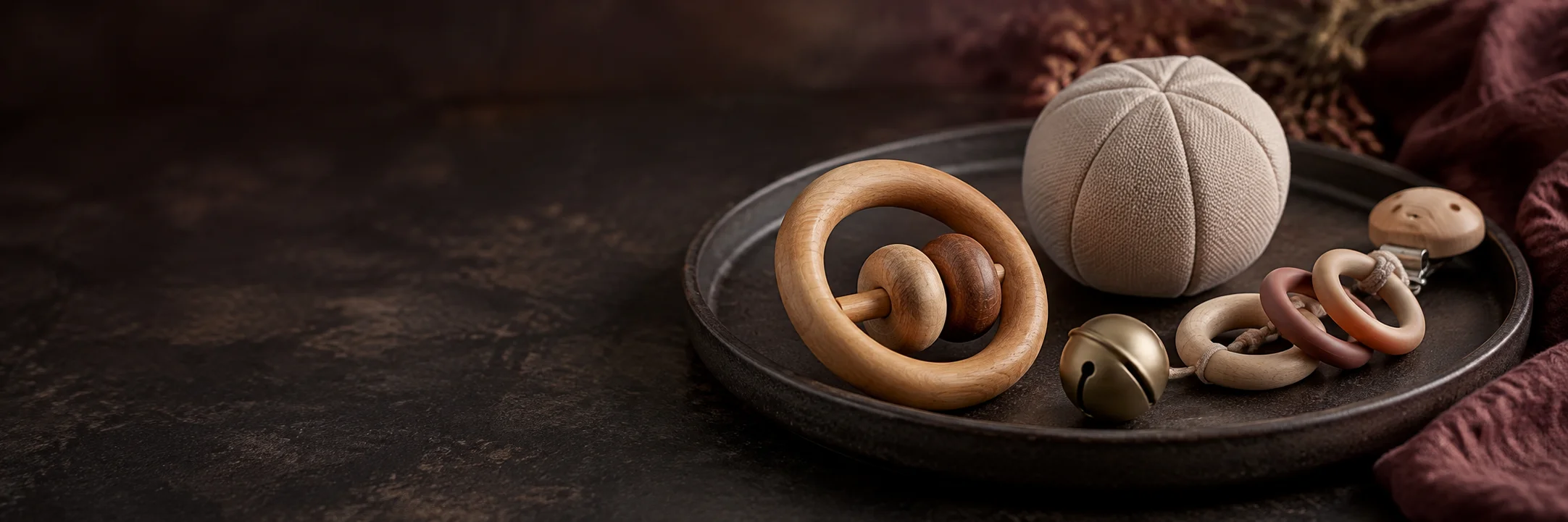
Overview
Studies for this row are still being read. Where a section is empty, the row has not yet accumulated contributing sources of the required kind.
Literature scope
Reported measurements from source notes are below. Sections that are still empty have not been synthesized into a population estimate. HMTc certification thresholds for products in this row continue to be developed under the certification program at heavymetalcertified.com, not on this public page.
Reading guide
Legal, regulatory and retailer teams can use the cited measurements, applicable limits and study limitations to assess the evidence for this category.
Quality teams can examine product form, measurement basis and sources of variation. Journalists and researchers can follow each reference to the original findings and methods.
Related tools and pages: heavymetalcertified.com · methodology
Evidence summary
Sources for this row will be listed here once they are catalogued.
Source Evidence Inventory
Sources for this row will be listed here once they are catalogued.
Supporting evidence and scope
Broader-scope sources for this row will be listed here when they are catalogued.
Federal/Regulatory Limits vs Field Findings
Regulatory limits for this row will be listed here once they are catalogued.
Controls and mitigation
Practical interventions to reduce heavy-metal load in this row, ordered by impact magnitude. Each lever names the magnitude of the effect with a cited source; cross-links to dedicated Mitigation pages where they exist.
- Sourcing levers — Not yet catalogued.
- Agronomic levers — Not yet catalogued. (See Agronomic mitigation for general agronomic mitigation context.)
- Processing levers — Not yet catalogued. (See Processing mitigation.)
- Formulation levers — Not yet catalogued. (See Formulation mitigation.)
- Testing and QC levers — Not yet catalogued. (See Testing and quality-control mitigation when published.)
- Packaging and storage levers — Not yet catalogued. (See Packaging and storage mitigation when published.)
Reported measurements
Mohammed and colleagues report one rattle, as total elemental content in mg/kg of the whole item after dry ashing, not a migration extract. Lead 2.1 ± 0.4 mg/kg, nickel 4.9 ± 0.4 mg/kg, chromium 0.8 ± 0.3 mg/kg, and manganese 4.2 ± 0.1 mg/kg. Cadmium and copper for that rattle are printed as below detection. The note does not print a numeric cadmium or copper concentration for the rattle, and it does not print a numeric detection limit in that cell.
Chromium is total chromium. The authors compare chromium with a chromium(III) figure of 37.5 mg/kg and nickel with a figure of 75 mg/kg. Those are the authors’ comparators. The note does not identify hexavalent chromium.
The same note prints two descriptions of lead against a regulatory limit. The abstract says two samples exceed the regulatory limit for lead. The body says all eighteen samples exceed the EN 71-3:2013 Category I total-content limit of 2 mg/kg. This page repeats both and does not choose one. Study-wide cadmium is printed as below detection to 4.1 mg/kg in the table and as 0.002 to 4.14 mg/kg in the abstract. Study-wide copper is printed as below detection to 2.2 mg/kg in the table and as 0.03 to 2.15 mg/kg in the abstract. Study-wide manganese is printed as below detection to 4.2 mg/kg in the table and as 0.03 to 4.22 mg/kg in the abstract. This page repeats each pair and does not choose one. Those study-wide ranges are not rattle-only values. Pacifiers, a teething ring, a sippy cup, a bottle nipple, a rubber duck, a plush bear, jewellery, and other toys in the same table are not rattles and are not repeated here. Heavy metals in children's toys and baby items commonly sold in Trinidad and Tobago
A rattle is mouthed, and that is not these models
Infants mouth rattles. Mouthing is not tooth-lead biomonitoring and not a hexavalent chromium gavage. Those papers do not test a rattle.
What remains uncertain
No cited study dosed a rattle or sampled saliva or stool after rattle use. Occupational serum nickel is not nickel in a toy.
How standards math uses this page
HMT&C certification thresholds for this row are developed under the certification program at heavymetalcertified.com, not on this page. The row-standard for this row is an aggregate computed from the contributing source pool in the row’s native finished-product basis; it is not a per-source decoration of any single value cited on this page. This public page reports literature evidence only.
Historical recalls and enforcement
Public regulatory events for this row, such as recalls and import alerts, will be listed here as they are catalogued.
Methodology
This page reports what the cited sources say about heavy-metal concentrations in rattles. Speciation is non-substitutable (iAs vs total arsenic (tAs), methylmercury (MeHg) vs total mercury (tHg), hexavalent chromium (Cr-VI) vs total Cr). Basis is preserved (finished-product as sold unless the source specifies otherwise; see each row for the basis label). Non-detect handling follows each source’s reporting convention. Pooling is avoided across LOD/LOQ, period, geography, and analytical-basis differences. HMT&C certification thresholds for products in this row are developed under the certification program at heavymetalcertified.com, not on this page; this public page reports literature evidence only.
The applicable regulatory jurisdictions for this row are: CPSC (ASTM F963, CPSIA, LHAMA), EU Toy Safety Directive.
References
Works cited in this page’s text, in first-appearance order. See Sources for this page’s source inventory. Each title links to a source record with bibliographic details, reported findings, and document provenance.
Sources
Sources for this row will be listed here once they are catalogued.
Sources
Source records associated with this topic. Inclusion does not establish that every finding applies to this product or ingredient. References above identify works cited in the text.
| # | Citation | Year | Type | Used on this page for |
|---|---|---|---|---|
| 1 | Mohammed et al. 2020. Heavy metals in children’s toys and baby items commonly sold in Trinidad and Tobago, Journal of Environmental Chemistry and Ecotoxicology 12(1):59-64 | 2020 | Peer-reviewed | TT/EU Pb, Cd, Cr, Ni, Cu, Mn occurrence in Eighteen plastic children’s toys and baby items intended for children under 5 years of age, obtained from the… (n=18) |
| 2 | Heckmann et al. 2015. CMR Substances in Toys – Market Surveillance and Risk Assessment, Survey of Chemical Substances in Consumer Products No. 141, 2015. Danish Environmental Protection Agency, Copenhagen. ISBN 978-87-93352-79-7. | 2015 | Regulatory agency report | DK/EU Sn, Al, Pb, Cd, Cr, Ni, Sb, tAs occurrence in Phase 2 chemical analyses: 28 toy products extracted by the Danish EPA’s Chemical Inspection Service (CIS) from 30… (n=28) |
Update history
No substantive edit history is available in this build. The full commit record is available in git.