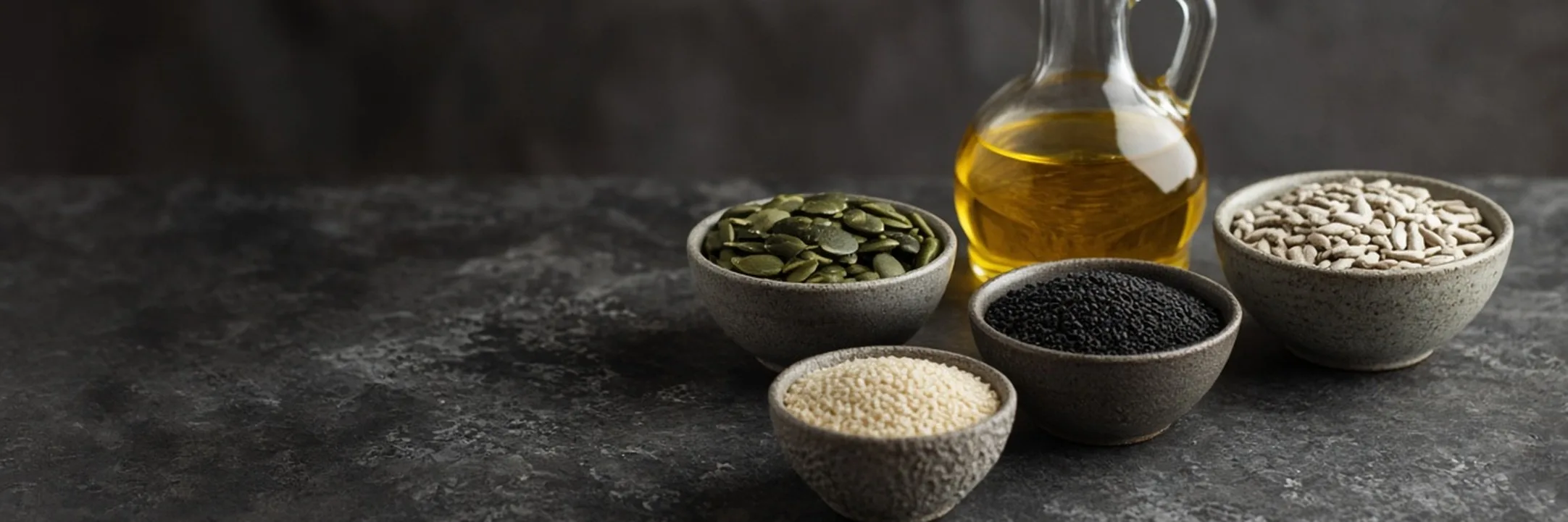
Oilseeds in the HMI library has 241 reported results for lead, cadmium, total arsenic, inorganic arsenic, total mercury, nickel, chromium, aluminium, tin, Cu, Fe, Mn and Zn from 12 sources.1GEMS/Food Contaminants database heavy-metal exportsGEMS/Food Contamination Monitoring and Assessment ProgrammeRead source →2Essential and toxic elements in plant-based dairy alternatives: implications for vegan dietsEuropean Food Research and TechnologyRead source →3The Effect of Sludge-Ash Granulates on the Content and Uptake of Heavy Metals by Winter Rape Seeds and TriticaleApplied SciencesRead source →4A comparative study of the content of heavy metals in oils:Peer-reviewed articleRead source →5Scientific Opinion on Lead in FoodEFSA Journal 2010;8(4):1570Read source →6Cadmium dietary exposure in the European populationEFSA Journal 2012;10(1):2551Read source →
-
Metals measured:
Lead, cadmium, total arsenic, inorganic arsenic, total mercury and nickel and others, in 241 results from 12 sources.1GEMS/Food Contaminants database heavy-metal exportsGEMS/Food Contamination Monitoring and Assessment ProgrammeRead source →2Essential and toxic elements in plant-based dairy alternatives: implications for vegan dietsEuropean Food Research and TechnologyRead source →3The Effect of Sludge-Ash Granulates on the Content and Uptake of Heavy Metals by Winter Rape Seeds and TriticaleApplied SciencesRead source →4A comparative study of the content of heavy metals in oils:Peer-reviewed articleRead source →
-
Main drivers:
Oilseeds, as sold from granulate I (experiment) had lead higher at 620 µg/kg, against 390 µg/kg for control (unamended soil, no granulate) in the same study.3The Effect of Sludge-Ash Granulates on the Content and Uptake of Heavy Metals by Winter Rape Seeds and TriticaleApplied SciencesRead source →
-
Practical framing:
Ask for lot results with a quantification limit well below the limit that applies in the destination market.1GEMS/Food Contaminants database heavy-metal exportsGEMS/Food Contamination Monitoring and Assessment ProgrammeRead source →2Essential and toxic elements in plant-based dairy alternatives: implications for vegan dietsEuropean Food Research and TechnologyRead source →3The Effect of Sludge-Ash Granulates on the Content and Uptake of Heavy Metals by Winter Rape Seeds and TriticaleApplied SciencesRead source →4A comparative study of the content of heavy metals in oils:Peer-reviewed articleRead source →
Oilseeds overview
Oilseeds in the HMI library has 241 reported results for lead, cadmium, total arsenic, inorganic arsenic, total mercury, nickel, chromium, aluminium, tin, Cu, Fe, Mn and Zn from 12 sources.1GEMS/Food Contaminants database heavy-metal exportsGEMS/Food Contamination Monitoring and Assessment ProgrammeRead source →2Essential and toxic elements in plant-based dairy alternatives: implications for vegan dietsEuropean Food Research and TechnologyRead source →3The Effect of Sludge-Ash Granulates on the Content and Uptake of Heavy Metals by Winter Rape Seeds and TriticaleApplied SciencesRead source →4A comparative study of the content of heavy metals in oils:Peer-reviewed articleRead source →5Scientific Opinion on Lead in FoodEFSA Journal 2010;8(4):1570Read source →6Cadmium dietary exposure in the European populationEFSA Journal 2012;10(1):2551Read source → WHO GEMS/Food submissions reported lead in oilseeds, as sold from 2,636 results in 4 reporting regions, with subgroup medians from 10 to 440 µg/kg.1GEMS/Food Contaminants database heavy-metal exportsGEMS/Food Contamination Monitoring and Assessment ProgrammeRead source → For cadmium, GEMS/Food gave subgroup medians from 6 to 1,100 µg/kg from 4,275 results.1GEMS/Food Contaminants database heavy-metal exportsGEMS/Food Contamination Monitoring and Assessment ProgrammeRead source →
Across 2 other studies of ordinary farms and markets, reported lead means and medians with the basis not stated ranged from 0 µg/kg (EFSA Panel on Contaminants in the Food Chain (CONTAM) 2010) to 1,430 µg/kg (authors 2016).4A comparative study of the content of heavy metals in oils:Peer-reviewed articleRead source →5Scientific Opinion on Lead in FoodEFSA Journal 2010;8(4):1570Read source → For cadmium, 3 studies with the basis not stated reported means and medians from 108 µg/kg (Joint FAO/WHO Expert Committee on Food Additives 2022) to 501 µg/kg (Joint FAO/WHO Expert Committee on Food Additives 2022).7Cadmium: dietary exposure assessmentWHO Food Additives Series, No. 82 (Safety evaluation of certain contaminants in food, prepared by the 91st meeting of JECFA)Read source → Higher results came from contaminated or exposed settings rather than ordinary supply. Oilseeds, as sold from granulate IV (50% sludge, 20% ash), dose 3 (60 g/pot) (experiment) had nickel higher at 690 µg/kg, against 210 µg/kg for control (unamended soil, no granulate) in the same study.3The Effect of Sludge-Ash Granulates on the Content and Uptake of Heavy Metals by Winter Rape Seeds and TriticaleApplied SciencesRead source →
For a buyer the practical points are the form bought, the basis a result is reported on, where the oilseeds came from and the laboratory’s reporting limit. Testing finds contamination but does not remove it.
What counts as oilseeds
This page covers oilseeds, as sold (241 results).1GEMS/Food Contaminants database heavy-metal exportsGEMS/Food Contamination Monitoring and Assessment ProgrammeRead source →2Essential and toxic elements in plant-based dairy alternatives: implications for vegan dietsEuropean Food Research and TechnologyRead source →3The Effect of Sludge-Ash Granulates on the Content and Uptake of Heavy Metals by Winter Rape Seeds and TriticaleApplied SciencesRead source →4A comparative study of the content of heavy metals in oils:Peer-reviewed articleRead source →5Scientific Opinion on Lead in FoodEFSA Journal 2010;8(4):1570Read source →6Cadmium dietary exposure in the European populationEFSA Journal 2012;10(1):2551Read source →
Results stay on the basis each source reports: as sold or fresh weight, dry weight, or unstated. Dry-weight, as-sold and unstated results are never pooled, and no moisture conversion is applied.
Heavy metal contamination profile of oilseeds
The table holds every extracted oilseeds result: one row for each statistic a source reports for a form, group and metal, 241 rows in all, grouped by metal and form; percentiles, ranges and maxima for the same samples as a mean or median are shown on that row.1GEMS/Food Contaminants database heavy-metal exportsGEMS/Food Contamination Monitoring and Assessment ProgrammeRead source →2Essential and toxic elements in plant-based dairy alternatives: implications for vegan dietsEuropean Food Research and TechnologyRead source →3The Effect of Sludge-Ash Granulates on the Content and Uptake of Heavy Metals by Winter Rape Seeds and TriticaleApplied SciencesRead source →4A comparative study of the content of heavy metals in oils:Peer-reviewed articleRead source →5Scientific Opinion on Lead in FoodEFSA Journal 2010;8(4):1570Read source →6Cadmium dietary exposure in the European populationEFSA Journal 2012;10(1):2551Read source → Monitoring medians are HMI calculations from individual submissions; non-detects remain intervals between zero and the reporting limit and are never read as zero.1GEMS/Food Contaminants database heavy-metal exportsGEMS/Food Contamination Monitoring and Assessment ProgrammeRead source →
19 rows can be rated against an HMI reference for the same form and basis, 124 rows have a direct same-study comparison, and the rest stay unrated with the reason recorded.
Comparison methods and scope
Each row is one statistic a source reports for one form of oilseeds, group and metal; percentiles, ranges and maxima reported for the same samples as a mean or median are shown on that row. Different forms and preparation states are kept apart, and dry-weight results never share a reference with as-sold or fresh-weight results. Ratings place a result against an HMI reference built from monitoring results and ordinary-setting medians for the same form and basis. Same-study contrasts compare a contaminated or treated site with its control, targeted with random sampling, a prepared form with the unprocessed one, or one group of a study with the median of its other groups. Held rows failed a check against their own source and are shown but not compared.
First displayed analyte: Lead: 50 findings from 5 sources. Each row retains its statistic and measurement basis.
Filter findings
229 of 229 findings · 13 analytes
About this table
| Food form | Collection scope | Finding (µg/kg) | Comparison | Evidence |
|---|---|---|---|---|
46 findings · 5 studies · 4 spread figures folded in | ||||
| Oilseeds, as soldWHO GEMS/Food | EURO2007–2008As sold / fresh | median. | ||
| Oilseeds, as soldWHO GEMS/Food | EURO2001–2019As sold / fresh | median. | ||
| Oilseeds, as soldWHO GEMS/Food | EURO2017As sold / fresh | median. | ||
| Oilseeds, as soldWHO GEMS/Food | EURO2000As sold / fresh | median. | ||
| Oilseeds, as soldWHO GEMS/Food | EURO2003–2017As sold / fresh | median. | ||
| Oilseeds, as soldWHO GEMS/Food | EURO2011As sold / fresh | median. | ||
| Oilseeds, as soldWHO GEMS/Food | EURO2003–2019As sold / fresh | median. | ||
| Oilseeds, as soldWHO GEMS/Food | EURO2003–2009As sold / fresh | median. | ||
| Oilseeds, as soldWHO GEMS/Food | EURO2001–2016As sold / fresh | median. | ||
| Oilseeds, as soldWHO GEMS/Food | EURO2006–2016As sold / fresh | median. | ||
| Oilseeds, as soldWHO GEMS/Food | PAHO2013–2017As sold / fresh | median. | ||
| Oilseeds, as soldWHO GEMS/Food | PAHO2013–2017As sold / fresh | median. | ||
| Oilseeds, as soldWHO GEMS/Food | PAHO1995–2009As sold / fresh | median. | ||
| Oilseeds, as soldWHO GEMS/Food | PAHO1995–2012As sold / fresh | median. | ||
| Oilseeds, as soldWHO GEMS/Food | SEARO2010–2011As sold / fresh | median. | ||
| Oilseeds, as soldWHO GEMS/Food | WPRO2013As sold / fresh | median. | ||
| Oilseeds, as soldWHO GEMS/Food | WPRO2005As sold / fresh | median. | ||
| Oilseeds, as soldZvěřina et al. 2025 | all samples in categoryCollection date unreportedAs sold / fresh | not detected. | ||
| Oilseeds, as soldWHO GEMS/Food | EURO2015–2017 | median. | ||
| Oilseeds, as soldMozdzer et al. 2023 | control (unamended soil, no granulate)Collection date unreported | mean. | ||
| Oilseeds, as soldMozdzer et al. 2023 | granulate ICollection date unreported | mean. | ||
| Oilseeds, as soldMozdzer et al. 2023 | granulate ICollection date unreported | mean. | ||
| Oilseeds, as soldMozdzer et al. 2023 | granulate ICollection date unreported | mean. | ||
| Oilseeds, as soldMozdzer et al. 2023 | granulate ICollection date unreported | mean. | ||
| Oilseeds, as soldMozdzer et al. 2023 | granulate II (40% sludge, 20% ash), dose 1 (15 g/pot)Collection date unreported | mean. | ||
| Oilseeds, as soldMozdzer et al. 2023 | granulate II (40% sludge, 20% ash), dose 2 (30 g/pot)Collection date unreported | mean. | ||
| Oilseeds, as soldMozdzer et al. 2023 | granulate II (40% sludge, 20% ash), dose 3 (45 g/pot)Collection date unreported | mean. | ||
| Oilseeds, as soldMozdzer et al. 2023 | granulate II (40% sludge, 20% ash), mean of doses 1-3Collection date unreported | mean. | ||
| Oilseeds, as soldMozdzer et al. 2023 | granulate III (20% sludge, 40% ash), dose 1 (14 g/pot)Collection date unreported | mean. | ||
| Oilseeds, as soldMozdzer et al. 2023 | granulate III (20% sludge, 40% ash), dose 2 (28 g/pot)Collection date unreported | mean. | ||
| Oilseeds, as soldMozdzer et al. 2023 | granulate III (20% sludge, 40% ash), dose 3 (42 g/pot)Collection date unreported | mean. | ||
| Oilseeds, as soldMozdzer et al. 2023 | granulate III (20% sludge, 40% ash), mean of doses 1-3Collection date unreported | mean. | ||
| Oilseeds, as soldMozdzer et al. 2023 | granulate IV (50% sludge, 20% ash), dose 1 (20 g/pot)Collection date unreported | mean. | ||
| Oilseeds, as soldMozdzer et al. 2023 | granulate IV (50% sludge, 20% ash), dose 2 (40 g/pot)Collection date unreported | mean. | ||
| Oilseeds, as soldMozdzer et al. 2023 | granulate IV (50% sludge, 20% ash), dose 3 (60 g/pot)Collection date unreported | mean. | ||
| Oilseeds, as soldMozdzer et al. 2023 | granulate IV (50% sludge, 20% ash), mean of doses 1-3Collection date unreported | mean. | ||
| Oilseeds, as soldMozdzer et al. 2023 | mean of all granulates and dosesCollection date unreported | mean. | ||
| Oilseeds, as soldMozdzer et al. 2023 | mean of granulates I-IV, dose 1Collection date unreported | mean. | ||
| Oilseeds, as soldMozdzer et al. 2023 | mean of granulates I-IV, dose 2Collection date unreported | mean. | ||
| Oilseeds, as soldMozdzer et al. 2023 | mean of granulates I-IV, dose 3Collection date unreported | mean. | ||
| Oilseeds, as soldauthors 2016 | raw oilseed, fraction 0, one production lotCollection date unreportedBasis not stated | mean. | ||
| Oilseeds, as soldEFSA Panel on Contaminants in the Food Chain (CONTAM) 2010 | Vegetables2000–2009Basis not stated | max. | ||
| Oilseeds, as soldEFSA Panel on Contaminants in the Food Chain (CONTAM) 2010 | Vegetables2000–2009Basis not stated | median. | ||
| Oilseeds, as soldEFSA Panel on Contaminants in the Food Chain (CONTAM) 2010 | Vegetables2000–2009Basis not stated | mean.Same samples: 0 µg/kg (percentile); 165 µg/kg (percentile) | ||
| Oilseeds, as soldEFSA Panel on Contaminants in the Food Chain (CONTAM) 2010 | Vegetables2000–2009Basis not stated | percentile. | ||
| Oilseeds, as soldEFSA Panel on Contaminants in the Food Chain (CONTAM) 2010 | Vegetables2000–2009Basis not stated | percentile. | ||
| Oilseeds, as soldEFSA Panel on Contaminants in the Food Chain (CONTAM) 2010 | Vegetables2000–2009Basis not stated | median. | ||
| Oilseeds, as soldEFSA Panel on Contaminants in the Food Chain (CONTAM) 2010 | Vegetables2000–2009Basis not stated | mean.Same samples: 6 µg/kg (percentile); 192 µg/kg (percentile) | ||
| Oilseeds, as soldEFSA Panel on Contaminants in the Food Chain (CONTAM) 2010 | Vegetables2000–2009Basis not stated | percentile. | ||
| Oilseeds, as soldEFSA Panel on Contaminants in the Food Chain (CONTAM) 2010 | Vegetables2000–2009Basis not stated | percentile. | ||
48 findings · 6 studies | ||||
| Oilseeds, as soldWHO GEMS/Food | EMRO2019As sold / fresh | median. | ||
| Oilseeds, as soldWHO GEMS/Food | EURO2007–2008As sold / fresh | median. | ||
| Oilseeds, as soldWHO GEMS/Food | EURO2003–2005As sold / fresh | median. | ||
| Oilseeds, as soldWHO GEMS/Food | EURO2003–2004As sold / fresh | median. | ||
| Oilseeds, as soldWHO GEMS/Food | EURO2001–2019As sold / fresh | median. | ||
| Oilseeds, as soldWHO GEMS/Food | EURO2017As sold / fresh | median. | ||
| Oilseeds, as soldWHO GEMS/Food | EURO2000–2006As sold / fresh | median. | ||
| Oilseeds, as soldWHO GEMS/Food | EURO2003–2017As sold / fresh | median. | ||
| Oilseeds, as soldWHO GEMS/Food | EURO2011As sold / fresh | median. | ||
| Oilseeds, as soldWHO GEMS/Food | EURO2001–2019As sold / fresh | median. | ||
| Oilseeds, as soldWHO GEMS/Food | EURO2003–2006As sold / fresh | median. | ||
| Oilseeds, as soldWHO GEMS/Food | EURO2003–2010As sold / fresh | median. | ||
| Oilseeds, as soldWHO GEMS/Food | EURO2004As sold / fresh | median. | ||
| Oilseeds, as soldWHO GEMS/Food | EURO2003–2006As sold / fresh | median. | ||
| Oilseeds, as soldWHO GEMS/Food | EURO2001–2016As sold / fresh | median. | ||
| Oilseeds, as soldWHO GEMS/Food | EURO2003–2016As sold / fresh | median. | ||
| Oilseeds, as soldWHO GEMS/Food | PAHO2019As sold / fresh | median. | ||
| Oilseeds, as soldWHO GEMS/Food | PAHO1999–2018As sold / fresh | median. | ||
| Oilseeds, as soldWHO GEMS/Food | PAHO2016As sold / fresh | median. | ||
| Oilseeds, as soldWHO GEMS/Food | WPRO2005–2008As sold / fresh | median. | ||
| Oilseeds, as soldZvěřina et al. 2025 | all samples in categoryCollection date unreportedAs sold / fresh | median. | ||
| Oilseeds, as soldZvěřina et al. 2025 | all samples in categoryCollection date unreportedAs sold / fresh | mean. | ||
| Oilseeds, as soldWHO GEMS/Food | EURO2015–2019 | median. | ||
| Oilseeds, as soldMozdzer et al. 2023 | control (unamended soil, no granulate)Collection date unreported | mean. | ||
| Oilseeds, as soldMozdzer et al. 2023 | granulate ICollection date unreported | mean. | ||
| Oilseeds, as soldMozdzer et al. 2023 | granulate ICollection date unreported | mean. | ||
| Oilseeds, as soldMozdzer et al. 2023 | granulate ICollection date unreported | mean. | ||
| Oilseeds, as soldMozdzer et al. 2023 | granulate ICollection date unreported | mean. | ||
| Oilseeds, as soldMozdzer et al. 2023 | granulate II (40% sludge, 20% ash), dose 1 (15 g/pot)Collection date unreported | mean. | ||
| Oilseeds, as soldMozdzer et al. 2023 | granulate II (40% sludge, 20% ash), dose 2 (30 g/pot)Collection date unreported | mean. | ||
| Oilseeds, as soldMozdzer et al. 2023 | granulate II (40% sludge, 20% ash), dose 3 (45 g/pot)Collection date unreported | mean. | ||
| Oilseeds, as soldMozdzer et al. 2023 | granulate II (40% sludge, 20% ash), mean of doses 1-3Collection date unreported | mean. | ||
| Oilseeds, as soldMozdzer et al. 2023 | granulate III (20% sludge, 40% ash), dose 1 (14 g/pot)Collection date unreported | mean. | ||
| Oilseeds, as soldMozdzer et al. 2023 | granulate III (20% sludge, 40% ash), dose 2 (28 g/pot)Collection date unreported | mean. | ||
| Oilseeds, as soldMozdzer et al. 2023 | granulate III (20% sludge, 40% ash), dose 3 (42 g/pot)Collection date unreported | mean. | ||
| Oilseeds, as soldMozdzer et al. 2023 | granulate III (20% sludge, 40% ash), mean of doses 1-3Collection date unreported | mean. | ||
| Oilseeds, as soldMozdzer et al. 2023 | granulate IV (50% sludge, 20% ash), dose 1 (20 g/pot)Collection date unreported | mean. | ||
| Oilseeds, as soldMozdzer et al. 2023 | granulate IV (50% sludge, 20% ash), dose 2 (40 g/pot)Collection date unreported | mean. | ||
| Oilseeds, as soldMozdzer et al. 2023 | granulate IV (50% sludge, 20% ash), dose 3 (60 g/pot)Collection date unreported | mean. | ||
| Oilseeds, as soldMozdzer et al. 2023 | granulate IV (50% sludge, 20% ash), mean of doses 1-3Collection date unreported | mean. | ||
| Oilseeds, as soldMozdzer et al. 2023 | mean of all granulates and dosesCollection date unreported | mean. | ||
| Oilseeds, as soldMozdzer et al. 2023 | mean of granulates I-IV, dose 1Collection date unreported | mean. | ||
| Oilseeds, as soldMozdzer et al. 2023 | mean of granulates I-IV, dose 2Collection date unreported | mean. | ||
| Oilseeds, as soldMozdzer et al. 2023 | mean of granulates I-IV, dose 3Collection date unreported | mean. | ||
| Oilseeds, as soldauthors 2016 | raw oilseed, fraction 0, one production lotCollection date unreportedBasis not stated | mean. | ||
| Oilseeds, as soldEuropean Food Safety Authority 2012 | all samples (EU Member State submissions)2003–2011Basis not stated | mean. | ||
| Oilseeds, as soldJoint FAO/WHO Expert Committee on Food Additives 2022 | GEMS/Food contaminants database2011Basis not stated | mean. | ||
| Oilseeds, as soldJoint FAO/WHO Expert Committee on Food Additives 2022 | GEMS/Food contaminants database2011Basis not stated | mean. | ||
18 findings · 2 studies · 2 spread figures folded in | ||||
| Oilseeds, as soldWHO GEMS/Food | EURO2019–2023As sold / fresh | median. | ||
| Oilseeds, as soldWHO GEMS/Food | EURO2023As sold / fresh | median. | ||
| Oilseeds, as soldWHO GEMS/Food | EURO2021–2023As sold / fresh | median. | ||
| Oilseeds, as soldWHO GEMS/Food | EURO2007–2008As sold / fresh | median. | ||
| Oilseeds, as soldWHO GEMS/Food | EURO2017As sold / fresh | median. | ||
| Oilseeds, as soldWHO GEMS/Food | EURO2004–2023As sold / fresh | median. | ||
| Oilseeds, as soldWHO GEMS/Food | EURO2000–2015As sold / fresh | median. | ||
| Oilseeds, as soldWHO GEMS/Food | EURO2007–2011As sold / fresh | median. | ||
| Oilseeds, as soldWHO GEMS/Food | EURO2011As sold / fresh | median. | ||
| Oilseeds, as soldWHO GEMS/Food | EURO2004–2023As sold / fresh | median. | ||
| Oilseeds, as soldWHO GEMS/Food | EURO2011As sold / fresh | median. | ||
| Oilseeds, as soldWHO GEMS/Food | EURO2003–2004As sold / fresh | median. | ||
| Oilseeds, as soldWHO GEMS/Food | EURO2001–2022As sold / fresh | median. | ||
| Oilseeds, as soldWHO GEMS/Food | EURO2004–2012As sold / fresh | median. | ||
| Oilseeds, as soldWHO GEMS/Food | WPRO2005As sold / fresh | median. | ||
| Oilseeds, as soldEFSA Panel on Contaminants in the Food Chain (CONTAM) 2009 | EFSA 2009 pooled European occurrence dataCollection date unreportedBasis not stated | median. | ||
| Oilseeds, as soldEFSA Panel on Contaminants in the Food Chain (CONTAM) 2009 | EFSA 2009 pooled European occurrence dataCollection date unreportedBasis not stated | mean.Same samples: 5,700 µg/kg (maximum); 150 µg/kg (percentile) | ||
| Oilseeds, as soldEFSA Panel on Contaminants in the Food Chain (CONTAM) 2009 | EFSA 2009 pooled European occurrence dataCollection date unreportedBasis not stated | mean. | ||
| Oilseeds, as soldEFSA Panel on Contaminants in the Food Chain (CONTAM) 2009 | EFSA 2009 pooled European occurrence dataCollection date unreportedBasis not stated | max. | ||
| Oilseeds, as soldEFSA Panel on Contaminants in the Food Chain (CONTAM) 2009 | EFSA 2009 pooled European occurrence dataCollection date unreportedBasis not stated | percentile. | ||
7 findings · 2 studies | ||||
| Oilseeds, as soldWHO GEMS/Food | EURO2022–2023As sold / fresh | median. | ||
| Oilseeds, as soldWHO GEMS/Food | EURO2023As sold / fresh | median. | ||
| Oilseeds, as soldWHO GEMS/Food | PAHO2016As sold / fresh | median. | ||
| Oilseeds, as soldWHO GEMS/Food | WPRO2022As sold / fresh | median. | ||
| Oilseeds, as soldEuropean Food Safety Authority (EFSA) 2014 | European dietary-survey occurrence data2003–2013Basis not stated | mean. | ||
| Oilseeds, as soldEuropean Food Safety Authority (EFSA) 2014 | European dietary-survey occurrence data2003–2013Basis not stated | mean. | ||
| Oilseeds, as soldEuropean Food Safety Authority (EFSA) 2014 | European dietary-survey occurrence data2003–2013Basis not stated | mean. | ||
9 findings · 2 studies · 4 spread figures folded in | ||||
| Oilseeds, as soldWHO GEMS/Food | EURO2007–2008As sold / fresh | median. | ||
| Oilseeds, as soldWHO GEMS/Food | EURO2001–2017As sold / fresh | median. | ||
| Oilseeds, as soldWHO GEMS/Food | EURO2000–2001As sold / fresh | median. | ||
| Oilseeds, as soldWHO GEMS/Food | EURO2001–2017As sold / fresh | median. | ||
| Oilseeds, as soldWHO GEMS/Food | EURO2001–2016As sold / fresh | median. | ||
| Oilseeds, as soldWHO GEMS/Food | WPRO2005As sold / fresh | median. | ||
| Oilseeds, as soldWHO GEMS/Food | WPRO2001As sold / fresh | median. | ||
| Oilseeds, as soldEFSA Panel on Contaminants in the Food Chain (CONTAM) 2012 | EU occurrence data2004–2011Basis not stated | median. | ||
| Oilseeds, as soldEFSA Panel on Contaminants in the Food Chain (CONTAM) 2012 | EU occurrence data2004–2011Basis not stated | mean.Same samples: 42 µg/kg (maximum); 12 µg/kg (percentile); 16 µg/kg (percentile); 23 µg/kg (percentile) | ||
| Oilseeds, as soldEFSA Panel on Contaminants in the Food Chain (CONTAM) 2012 | EU occurrence data2004–2011Basis not stated | max. | ||
| Oilseeds, as soldEFSA Panel on Contaminants in the Food Chain (CONTAM) 2012 | EU occurrence data2004–2011Basis not stated | percentile. | ||
| Oilseeds, as soldEFSA Panel on Contaminants in the Food Chain (CONTAM) 2012 | EU occurrence data2004–2011Basis not stated | percentile. | ||
| Oilseeds, as soldEFSA Panel on Contaminants in the Food Chain (CONTAM) 2012 | EU occurrence data2004–2011Basis not stated | percentile. | ||
26 findings · 3 studies · 2 spread figures folded in | ||||
| Oilseeds, as soldWHO GEMS/Food | EURO2000As sold / fresh | median. | ||
| Oilseeds, as soldEFSA Panel on Contaminants in the Food Chain (CONTAM) 2015 | EU Member State submissions to EFSA, all samples (LB)2003–2012As sold / fresh | mean.Same samples: 2,100 µg/kg (percentile) | ||
| Oilseeds, as soldEFSA Panel on Contaminants in the Food Chain (CONTAM) 2015 | EU Member State submissions to EFSA, all samples (LB)2003–2012As sold / fresh | mean. | ||
| Oilseeds, as soldEFSA Panel on Contaminants in the Food Chain (CONTAM) 2015 | EU Member State submissions to EFSA, all samples (LB)2003–2012As sold / fresh | percentile. | ||
| Oilseeds, as soldEFSA Panel on Contaminants in the Food Chain (CONTAM) 2015 | EU Member State submissions to EFSA, all samples (UB)2003–2012As sold / fresh | mean.Same samples: 2,100 µg/kg (percentile) | ||
| Oilseeds, as soldEFSA Panel on Contaminants in the Food Chain (CONTAM) 2015 | EU Member State submissions to EFSA, all samples (UB)2003–2012As sold / fresh | mean. | ||
| Oilseeds, as soldEFSA Panel on Contaminants in the Food Chain (CONTAM) 2015 | EU Member State submissions to EFSA, all samples (UB)2003–2012As sold / fresh | percentile. | ||
| Oilseeds, as soldMozdzer et al. 2023 | control (unamended soil, no granulate)Collection date unreported | mean. | ||
| Oilseeds, as soldMozdzer et al. 2023 | granulate ICollection date unreported | mean. | ||
| Oilseeds, as soldMozdzer et al. 2023 | granulate ICollection date unreported | mean. | ||
| Oilseeds, as soldMozdzer et al. 2023 | granulate ICollection date unreported | mean. | ||
| Oilseeds, as soldMozdzer et al. 2023 | granulate ICollection date unreported | mean. | ||
| Oilseeds, as soldMozdzer et al. 2023 | granulate II (40% sludge, 20% ash), dose 1 (15 g/pot)Collection date unreported | mean. | ||
| Oilseeds, as soldMozdzer et al. 2023 | granulate II (40% sludge, 20% ash), dose 2 (30 g/pot)Collection date unreported | mean. | ||
| Oilseeds, as soldMozdzer et al. 2023 | granulate II (40% sludge, 20% ash), dose 3 (45 g/pot)Collection date unreported | mean. | ||
| Oilseeds, as soldMozdzer et al. 2023 | granulate II (40% sludge, 20% ash), mean of doses 1-3Collection date unreported | mean. | ||
| Oilseeds, as soldMozdzer et al. 2023 | granulate III (20% sludge, 40% ash), dose 1 (14 g/pot)Collection date unreported | mean. | ||
| Oilseeds, as soldMozdzer et al. 2023 | granulate III (20% sludge, 40% ash), dose 2 (28 g/pot)Collection date unreported | mean. | ||
| Oilseeds, as soldMozdzer et al. 2023 | granulate III (20% sludge, 40% ash), dose 3 (42 g/pot)Collection date unreported | mean. | ||
| Oilseeds, as soldMozdzer et al. 2023 | granulate III (20% sludge, 40% ash), mean of doses 1-3Collection date unreported | mean. | ||
| Oilseeds, as soldMozdzer et al. 2023 | granulate IV (50% sludge, 20% ash), dose 1 (20 g/pot)Collection date unreported | mean. | ||
| Oilseeds, as soldMozdzer et al. 2023 | granulate IV (50% sludge, 20% ash), dose 2 (40 g/pot)Collection date unreported | mean. | ||
| Oilseeds, as soldMozdzer et al. 2023 | granulate IV (50% sludge, 20% ash), dose 3 (60 g/pot)Collection date unreported | mean. | ||
| Oilseeds, as soldMozdzer et al. 2023 | granulate IV (50% sludge, 20% ash), mean of doses 1-3Collection date unreported | mean. | ||
| Oilseeds, as soldMozdzer et al. 2023 | mean of all granulates and dosesCollection date unreported | mean. | ||
| Oilseeds, as soldMozdzer et al. 2023 | mean of granulates I-IV, dose 1Collection date unreported | mean. | ||
| Oilseeds, as soldMozdzer et al. 2023 | mean of granulates I-IV, dose 2Collection date unreported | mean. | ||
| Oilseeds, as soldMozdzer et al. 2023 | mean of granulates I-IV, dose 3Collection date unreported | mean. | ||
24 findings · 3 studies | ||||
| Oilseeds, as soldWHO GEMS/Food | EURO2000As sold / fresh | median. | ||
| Oilseeds, as soldEFSA Panel on Contaminants in the Food Chain (CONTAM) 2014 | all samples, EFSA FoodEx subgroup, LB2000–2013As sold / fresh | mean. | ||
| Oilseeds, as soldEFSA Panel on Contaminants in the Food Chain (CONTAM) 2014 | all samples, EFSA FoodEx subgroup, UB2000–2013As sold / fresh | mean. | ||
| Oilseeds, as soldMozdzer et al. 2023 | control (unamended soil, no granulate)Collection date unreported | mean. | ||
| Oilseeds, as soldMozdzer et al. 2023 | granulate ICollection date unreported | mean. | ||
| Oilseeds, as soldMozdzer et al. 2023 | granulate ICollection date unreported | mean. | ||
| Oilseeds, as soldMozdzer et al. 2023 | granulate ICollection date unreported | mean. | ||
| Oilseeds, as soldMozdzer et al. 2023 | granulate ICollection date unreported | mean. | ||
| Oilseeds, as soldMozdzer et al. 2023 | granulate II (40% sludge, 20% ash), dose 1 (15 g/pot)Collection date unreported | mean. | ||
| Oilseeds, as soldMozdzer et al. 2023 | granulate II (40% sludge, 20% ash), dose 2 (30 g/pot)Collection date unreported | mean. | ||
| Oilseeds, as soldMozdzer et al. 2023 | granulate II (40% sludge, 20% ash), dose 3 (45 g/pot)Collection date unreported | mean. | ||
| Oilseeds, as soldMozdzer et al. 2023 | granulate II (40% sludge, 20% ash), mean of doses 1-3Collection date unreported | mean. | ||
| Oilseeds, as soldMozdzer et al. 2023 | granulate III (20% sludge, 40% ash), dose 1 (14 g/pot)Collection date unreported | mean. | ||
| Oilseeds, as soldMozdzer et al. 2023 | granulate III (20% sludge, 40% ash), dose 2 (28 g/pot)Collection date unreported | mean. | ||
| Oilseeds, as soldMozdzer et al. 2023 | granulate III (20% sludge, 40% ash), dose 3 (42 g/pot)Collection date unreported | mean. | ||
| Oilseeds, as soldMozdzer et al. 2023 | granulate III (20% sludge, 40% ash), mean of doses 1-3Collection date unreported | mean. | ||
| Oilseeds, as soldMozdzer et al. 2023 | granulate IV (50% sludge, 20% ash), dose 1 (20 g/pot)Collection date unreported | mean. | ||
| Oilseeds, as soldMozdzer et al. 2023 | granulate IV (50% sludge, 20% ash), dose 2 (40 g/pot)Collection date unreported | mean. | ||
| Oilseeds, as soldMozdzer et al. 2023 | granulate IV (50% sludge, 20% ash), dose 3 (60 g/pot)Collection date unreported | mean. | ||
| Oilseeds, as soldMozdzer et al. 2023 | granulate IV (50% sludge, 20% ash), mean of doses 1-3Collection date unreported | mean. | ||
| Oilseeds, as soldMozdzer et al. 2023 | mean of all granulates and dosesCollection date unreported | mean. | ||
| Oilseeds, as soldMozdzer et al. 2023 | mean of granulates I-IV, dose 1Collection date unreported | mean. | ||
| Oilseeds, as soldMozdzer et al. 2023 | mean of granulates I-IV, dose 2Collection date unreported | mean. | ||
| Oilseeds, as soldMozdzer et al. 2023 | mean of granulates I-IV, dose 3Collection date unreported | mean. | ||
2 findings · 1 study | ||||
| Oilseeds, as soldWHO GEMS/Food | EURO2007–2008As sold / fresh | median. | ||
| Oilseeds, as soldWHO GEMS/Food | EURO2000As sold / fresh | median. | ||
3 findings · 1 study | ||||
| Oilseeds, as soldWHO GEMS/Food | EURO2007–2008As sold / fresh | median. | ||
| Oilseeds, as soldWHO GEMS/Food | WPRO2005As sold / fresh | median. | ||
| Oilseeds, as soldWHO GEMS/Food | WPRO2001As sold / fresh | median. | ||
22 findings · 2 studies | ||||
| Oilseeds, as soldMozdzer et al. 2023 | control (unamended soil, no granulate)Collection date unreported | mean. | ||
| Oilseeds, as soldMozdzer et al. 2023 | granulate ICollection date unreported | mean. | ||
| Oilseeds, as soldMozdzer et al. 2023 | granulate ICollection date unreported | mean. | ||
| Oilseeds, as soldMozdzer et al. 2023 | granulate ICollection date unreported | mean. | ||
| Oilseeds, as soldMozdzer et al. 2023 | granulate ICollection date unreported | mean. | ||
| Oilseeds, as soldMozdzer et al. 2023 | granulate II (40% sludge, 20% ash), dose 1 (15 g/pot)Collection date unreported | mean. | ||
| Oilseeds, as soldMozdzer et al. 2023 | granulate II (40% sludge, 20% ash), dose 2 (30 g/pot)Collection date unreported | mean. | ||
| Oilseeds, as soldMozdzer et al. 2023 | granulate II (40% sludge, 20% ash), dose 3 (45 g/pot)Collection date unreported | mean. | ||
| Oilseeds, as soldMozdzer et al. 2023 | granulate II (40% sludge, 20% ash), mean of doses 1-3Collection date unreported | mean. | ||
| Oilseeds, as soldMozdzer et al. 2023 | granulate III (20% sludge, 40% ash), dose 1 (14 g/pot)Collection date unreported | mean. | ||
| Oilseeds, as soldMozdzer et al. 2023 | granulate III (20% sludge, 40% ash), dose 2 (28 g/pot)Collection date unreported | mean. | ||
| Oilseeds, as soldMozdzer et al. 2023 | granulate III (20% sludge, 40% ash), dose 3 (42 g/pot)Collection date unreported | mean. | ||
| Oilseeds, as soldMozdzer et al. 2023 | granulate III (20% sludge, 40% ash), mean of doses 1-3Collection date unreported | mean. | ||
| Oilseeds, as soldMozdzer et al. 2023 | granulate IV (50% sludge, 20% ash), dose 1 (20 g/pot)Collection date unreported | mean. | ||
| Oilseeds, as soldMozdzer et al. 2023 | granulate IV (50% sludge, 20% ash), dose 2 (40 g/pot)Collection date unreported | mean. | ||
| Oilseeds, as soldMozdzer et al. 2023 | granulate IV (50% sludge, 20% ash), dose 3 (60 g/pot)Collection date unreported | mean. | ||
| Oilseeds, as soldMozdzer et al. 2023 | granulate IV (50% sludge, 20% ash), mean of doses 1-3Collection date unreported | mean. | ||
| Oilseeds, as soldMozdzer et al. 2023 | mean of all granulates and dosesCollection date unreported | mean. | ||
| Oilseeds, as soldMozdzer et al. 2023 | mean of granulates I-IV, dose 1Collection date unreported | mean. | ||
| Oilseeds, as soldMozdzer et al. 2023 | mean of granulates I-IV, dose 2Collection date unreported | mean. | ||
| Oilseeds, as soldMozdzer et al. 2023 | mean of granulates I-IV, dose 3Collection date unreported | mean. | ||
| Oilseeds, as soldauthors 2016 | raw oilseed, fraction 0, one production lotCollection date unreportedBasis not stated | mean. | ||
1 finding · 1 study | ||||
| Oilseeds, as soldauthors 2016 | raw oilseed, fraction 0, one production lotCollection date unreportedBasis not stated | mean. | ||
1 finding · 1 study | ||||
| Oilseeds, as soldauthors 2016 | raw oilseed, fraction 0, one production lotCollection date unreportedBasis not stated | mean. | ||
22 findings · 2 studies | ||||
| Oilseeds, as soldMozdzer et al. 2023 | control (unamended soil, no granulate)Collection date unreported | mean. | ||
| Oilseeds, as soldMozdzer et al. 2023 | granulate ICollection date unreported | mean. | ||
| Oilseeds, as soldMozdzer et al. 2023 | granulate ICollection date unreported | mean. | ||
| Oilseeds, as soldMozdzer et al. 2023 | granulate ICollection date unreported | mean. | ||
| Oilseeds, as soldMozdzer et al. 2023 | granulate ICollection date unreported | mean. | ||
| Oilseeds, as soldMozdzer et al. 2023 | granulate II (40% sludge, 20% ash), dose 1 (15 g/pot)Collection date unreported | mean. | ||
| Oilseeds, as soldMozdzer et al. 2023 | granulate II (40% sludge, 20% ash), dose 2 (30 g/pot)Collection date unreported | mean. | ||
| Oilseeds, as soldMozdzer et al. 2023 | granulate II (40% sludge, 20% ash), dose 3 (45 g/pot)Collection date unreported | mean. | ||
| Oilseeds, as soldMozdzer et al. 2023 | granulate II (40% sludge, 20% ash), mean of doses 1-3Collection date unreported | mean. | ||
| Oilseeds, as soldMozdzer et al. 2023 | granulate III (20% sludge, 40% ash), dose 1 (14 g/pot)Collection date unreported | mean. | ||
| Oilseeds, as soldMozdzer et al. 2023 | granulate III (20% sludge, 40% ash), dose 2 (28 g/pot)Collection date unreported | mean. | ||
| Oilseeds, as soldMozdzer et al. 2023 | granulate III (20% sludge, 40% ash), dose 3 (42 g/pot)Collection date unreported | mean. | ||
| Oilseeds, as soldMozdzer et al. 2023 | granulate III (20% sludge, 40% ash), mean of doses 1-3Collection date unreported | mean. | ||
| Oilseeds, as soldMozdzer et al. 2023 | granulate IV (50% sludge, 20% ash), dose 1 (20 g/pot)Collection date unreported | mean. | ||
| Oilseeds, as soldMozdzer et al. 2023 | granulate IV (50% sludge, 20% ash), dose 2 (40 g/pot)Collection date unreported | mean. | ||
| Oilseeds, as soldMozdzer et al. 2023 | granulate IV (50% sludge, 20% ash), dose 3 (60 g/pot)Collection date unreported | mean. | ||
| Oilseeds, as soldMozdzer et al. 2023 | granulate IV (50% sludge, 20% ash), mean of doses 1-3Collection date unreported | mean. | ||
| Oilseeds, as soldMozdzer et al. 2023 | mean of all granulates and dosesCollection date unreported | mean. | ||
| Oilseeds, as soldMozdzer et al. 2023 | mean of granulates I-IV, dose 1Collection date unreported | mean. | ||
| Oilseeds, as soldMozdzer et al. 2023 | mean of granulates I-IV, dose 2Collection date unreported | mean. | ||
| Oilseeds, as soldMozdzer et al. 2023 | mean of granulates I-IV, dose 3Collection date unreported | mean. | ||
| Oilseeds, as soldauthors 2016 | raw oilseed, fraction 0, one production lotCollection date unreportedBasis not stated | mean. | ||
Shared dataset methods and interpretation
Source summaries retain their original statistic, material, basis and censoring. Each source drawer identifies methods and overlapping samples. No matched reference or pooled distribution is inferred.
HMI oilseeds Pb reference · Oilseeds, as sold
Reference and scope
HMI oilseeds Pb reference · Oilseeds, as sold. Oilseeds, as sold; As sold, as eaten or fresh weight, µg/kg; no moisture conversion. Distribution of subgroup median concentration values.
| Reference (µg/kg) | Q1 | Median | Q3 |
|---|---|---|---|
| Primary HMI reference | ≤17 | ≤47.7 | 23–50 (bounded) |
| Alternative weighting | ≤17 | ≤50 | 15–50 (bounded) |
106 reference units; 1 sampling family. Counts describe evidence units, not independent studies or certainty.
| Contributing family | Reference units | Weight |
|---|---|---|
| WHO GEMS/Food | 106 | 100% |
Methods
HMI pools subgroup medians for oilseeds, as sold on a as sold, as eaten or fresh weight basis: monitoring results summarized as one median per reporting region, sampling type and collection year, total diet composites and printed sample values as single observations, and printed subgroup medians from ordinary farms or markets. Each sampling family has equal total weight. Non-detects stay as zero-to-limit intervals, so quartiles carry lower and upper bounds. Means, ranges and maxima never enter as observations. Other forms, other bases, targeted sampling and results from mining, industrial, wastewater-affected, experimental, fertiliser or manufacturer settings are kept out of this reference.
Inverse weighted empirical CDF; midpoint at exact cumulative-weight boundaries. At least four reference units and a definitely positive Q1 to Q3 spread are required. This is a display eligibility rule, not statistical validation.
Limitations
WHO GEMS/Food is the only compatible sampling family for oilseeds, as sold on this basis in the completed oilseeds ledger, so this single-family reference cannot represent other markets. Reporting regions and purchase markets are not growing areas. Non-detects with differing limits widen the bounds. A position is descriptive concentration, not a safety or compliance judgment.
Admitted source families
Reference version and interpretation
Frozen evidence selection: 2026-10-22. Method: hmi-pooled-reference-v2.
hmi-pooled-reference-v2:oilseeds-2fdd38d4c55b:d9bc09b8ea53
The reference is computed by HMI from admitted evidence, not copied from a study baseline. It describes the evidence currently in this scope; it is not a worldwide or current-lot benchmark. Source, year and region filters do not change it. Different HMI scopes are not one common ranking.
HMI oilseeds Pb reference · Oilseeds, as sold, dry weight
Reference and scope
HMI oilseeds Pb reference · Oilseeds, as sold, dry weight. Oilseeds, as sold; Dry weight, µg/kg; no moisture conversion. Distribution of subgroup median concentration values.
| Reference (µg/kg) | Q1 | Median | Q3 |
|---|---|---|---|
| Primary HMI reference | ≤15 | 415–423 (bounded) | 830 |
| Alternative weighting | ≤15 | 415–423 (bounded) | 830 |
2 reference units; 1 sampling family. Counts describe evidence units, not independent studies or certainty.
| Contributing family | Reference units | Weight |
|---|---|---|
| WHO GEMS/Food | 2 | 100% |
Methods
HMI pools subgroup medians for oilseeds, as sold on a dry weight basis: monitoring results summarized as one median per reporting region, sampling type and collection year, total diet composites and printed sample values as single observations, and printed subgroup medians from ordinary farms or markets. Each sampling family has equal total weight. Non-detects stay as zero-to-limit intervals, so quartiles carry lower and upper bounds. Means, ranges and maxima never enter as observations. Other forms, other bases, targeted sampling and results from mining, industrial, wastewater-affected, experimental, fertiliser or manufacturer settings are kept out of this reference.
Inverse weighted empirical CDF; midpoint at exact cumulative-weight boundaries. At least four reference units and a definitely positive Q1 to Q3 spread are required. This is a display eligibility rule, not statistical validation.
Limitations
WHO GEMS/Food is the only compatible sampling family for oilseeds, as sold on this basis in the completed oilseeds ledger, so this single-family reference cannot represent other markets. Reporting regions and purchase markets are not growing areas. Non-detects with differing limits widen the bounds. A position is descriptive concentration, not a safety or compliance judgment.
Admitted source families
Reference version and interpretation
Frozen evidence selection: 2026-10-22. Method: hmi-pooled-reference-v2.
hmi-pooled-reference-v2:oilseeds-25c607d4fba2:12e05ed85c9a
The reference is computed by HMI from admitted evidence, not copied from a study baseline. It describes the evidence currently in this scope; it is not a worldwide or current-lot benchmark. Source, year and region filters do not change it. Different HMI scopes are not one common ranking.
HMI oilseeds Cd reference · Oilseeds, as sold
Reference and scope
HMI oilseeds Cd reference · Oilseeds, as sold. Oilseeds, as sold; As sold, as eaten or fresh weight, µg/kg; no moisture conversion. Distribution of subgroup median concentration values.
| Reference (µg/kg) | Q1 | Median | Q3 |
|---|---|---|---|
| Primary HMI reference | 9.68–13.5 (bounded) | 57–58.5 (bounded) | 303 |
| Alternative weighting | 20–22 (bounded) | 178 | 262 |
100 reference units; 1 sampling family. Counts describe evidence units, not independent studies or certainty.
| Contributing family | Reference units | Weight |
|---|---|---|
| WHO GEMS/Food | 100 | 100% |
Methods
HMI pools subgroup medians for oilseeds, as sold on a as sold, as eaten or fresh weight basis: monitoring results summarized as one median per reporting region, sampling type and collection year, total diet composites and printed sample values as single observations, and printed subgroup medians from ordinary farms or markets. Each sampling family has equal total weight. Non-detects stay as zero-to-limit intervals, so quartiles carry lower and upper bounds. Means, ranges and maxima never enter as observations. Other forms, other bases, targeted sampling and results from mining, industrial, wastewater-affected, experimental, fertiliser or manufacturer settings are kept out of this reference.
Inverse weighted empirical CDF; midpoint at exact cumulative-weight boundaries. At least four reference units and a definitely positive Q1 to Q3 spread are required. This is a display eligibility rule, not statistical validation.
Limitations
WHO GEMS/Food is the only compatible sampling family for oilseeds, as sold on this basis in the completed oilseeds ledger, so this single-family reference cannot represent other markets. Reporting regions and purchase markets are not growing areas. Non-detects with differing limits widen the bounds. A position is descriptive concentration, not a safety or compliance judgment.
Admitted source families
Reference version and interpretation
Frozen evidence selection: 2026-10-22. Method: hmi-pooled-reference-v2.
hmi-pooled-reference-v2:oilseeds-bc69ad49e78d:6899a245dc44
The reference is computed by HMI from admitted evidence, not copied from a study baseline. It describes the evidence currently in this scope; it is not a worldwide or current-lot benchmark. Source, year and region filters do not change it. Different HMI scopes are not one common ranking.
HMI oilseeds Cd reference · Oilseeds, as sold, dry weight
Reference and scope
HMI oilseeds Cd reference · Oilseeds, as sold, dry weight. Oilseeds, as sold; Dry weight, µg/kg; no moisture conversion. Distribution of subgroup median concentration values.
| Reference (µg/kg) | Q1 | Median | Q3 |
|---|---|---|---|
| Primary HMI reference | 280 | 1100 | 1160 |
| Alternative weighting | 280 | 1100 | 1160 |
3 reference units; 1 sampling family. Counts describe evidence units, not independent studies or certainty.
| Contributing family | Reference units | Weight |
|---|---|---|
| WHO GEMS/Food | 3 | 100% |
Methods
HMI pools subgroup medians for oilseeds, as sold on a dry weight basis: monitoring results summarized as one median per reporting region, sampling type and collection year, total diet composites and printed sample values as single observations, and printed subgroup medians from ordinary farms or markets. Each sampling family has equal total weight. Non-detects stay as zero-to-limit intervals, so quartiles carry lower and upper bounds. Means, ranges and maxima never enter as observations. Other forms, other bases, targeted sampling and results from mining, industrial, wastewater-affected, experimental, fertiliser or manufacturer settings are kept out of this reference.
Inverse weighted empirical CDF; midpoint at exact cumulative-weight boundaries. At least four reference units and a definitely positive Q1 to Q3 spread are required. This is a display eligibility rule, not statistical validation.
Limitations
WHO GEMS/Food is the only compatible sampling family for oilseeds, as sold on this basis in the completed oilseeds ledger, so this single-family reference cannot represent other markets. Reporting regions and purchase markets are not growing areas. Non-detects with differing limits widen the bounds. A position is descriptive concentration, not a safety or compliance judgment.
Admitted source families
Reference version and interpretation
Frozen evidence selection: 2026-10-22. Method: hmi-pooled-reference-v2.
hmi-pooled-reference-v2:oilseeds-24c00f831a8c:54b42a733353
The reference is computed by HMI from admitted evidence, not copied from a study baseline. It describes the evidence currently in this scope; it is not a worldwide or current-lot benchmark. Source, year and region filters do not change it. Different HMI scopes are not one common ranking.
HMI oilseeds tAs reference · Oilseeds, as sold
Reference and scope
HMI oilseeds tAs reference · Oilseeds, as sold. Oilseeds, as sold; As sold, as eaten or fresh weight, µg/kg; no moisture conversion. Distribution of subgroup median concentration values.
| Reference (µg/kg) | Q1 | Median | Q3 |
|---|---|---|---|
| Primary HMI reference | ≤20 | 7–29.5 (bounded) | 20–46.1 (bounded) |
| Alternative weighting | ≤18.5 | 7.5–31.6 (bounded) | 20–51 (bounded) |
66 reference units; 1 sampling family. Counts describe evidence units, not independent studies or certainty.
| Contributing family | Reference units | Weight |
|---|---|---|
| WHO GEMS/Food | 66 | 100% |
Methods
HMI pools subgroup medians for oilseeds, as sold on a as sold, as eaten or fresh weight basis: monitoring results summarized as one median per reporting region, sampling type and collection year, total diet composites and printed sample values as single observations, and printed subgroup medians from ordinary farms or markets. Each sampling family has equal total weight. Non-detects stay as zero-to-limit intervals, so quartiles carry lower and upper bounds. Means, ranges and maxima never enter as observations. Other forms, other bases, targeted sampling and results from mining, industrial, wastewater-affected, experimental, fertiliser or manufacturer settings are kept out of this reference.
Inverse weighted empirical CDF; midpoint at exact cumulative-weight boundaries. At least four reference units and a definitely positive Q1 to Q3 spread are required. This is a display eligibility rule, not statistical validation.
Limitations
WHO GEMS/Food is the only compatible sampling family for oilseeds, as sold on this basis in the completed oilseeds ledger, so this single-family reference cannot represent other markets. Reporting regions and purchase markets are not growing areas. Non-detects with differing limits widen the bounds. A position is descriptive concentration, not a safety or compliance judgment.
Admitted source families
Reference version and interpretation
Frozen evidence selection: 2026-10-22. Method: hmi-pooled-reference-v2.
hmi-pooled-reference-v2:oilseeds-5765c504cd5f:b7dc8d589a89
The reference is computed by HMI from admitted evidence, not copied from a study baseline. It describes the evidence currently in this scope; it is not a worldwide or current-lot benchmark. Source, year and region filters do not change it. Different HMI scopes are not one common ranking.
HMI oilseeds iAs reference · Oilseeds, as sold
Reference and scope
HMI oilseeds iAs reference · Oilseeds, as sold. Oilseeds, as sold; As sold, as eaten or fresh weight, µg/kg; no moisture conversion. Distribution of subgroup median concentration values.
| Reference (µg/kg) | Q1 | Median | Q3 |
|---|---|---|---|
| Primary HMI reference | ≤9.84 | 3.28–20 (bounded) | 9.84–20 (bounded) |
| Alternative weighting | ≤9.84 | 1.64–20 (bounded) | 9.84–20 (bounded) |
5 reference units; 1 sampling family. Counts describe evidence units, not independent studies or certainty.
| Contributing family | Reference units | Weight |
|---|---|---|
| WHO GEMS/Food | 5 | 100% |
Methods
HMI pools subgroup medians for oilseeds, as sold on a as sold, as eaten or fresh weight basis: monitoring results summarized as one median per reporting region, sampling type and collection year, total diet composites and printed sample values as single observations, and printed subgroup medians from ordinary farms or markets. Each sampling family has equal total weight. Non-detects stay as zero-to-limit intervals, so quartiles carry lower and upper bounds. Means, ranges and maxima never enter as observations. Other forms, other bases, targeted sampling and results from mining, industrial, wastewater-affected, experimental, fertiliser or manufacturer settings are kept out of this reference.
Inverse weighted empirical CDF; midpoint at exact cumulative-weight boundaries. At least four reference units and a definitely positive Q1 to Q3 spread are required. This is a display eligibility rule, not statistical validation.
Limitations
WHO GEMS/Food is the only compatible sampling family for oilseeds, as sold on this basis in the completed oilseeds ledger, so this single-family reference cannot represent other markets. Reporting regions and purchase markets are not growing areas. Non-detects with differing limits widen the bounds. A position is descriptive concentration, not a safety or compliance judgment.
Admitted source families
Reference version and interpretation
Frozen evidence selection: 2026-10-22. Method: hmi-pooled-reference-v2.
hmi-pooled-reference-v2:oilseeds-b12b43305a55:1e90df2764c8
The reference is computed by HMI from admitted evidence, not copied from a study baseline. It describes the evidence currently in this scope; it is not a worldwide or current-lot benchmark. Source, year and region filters do not change it. Different HMI scopes are not one common ranking.
HMI oilseeds tHg reference · Oilseeds, as sold
Reference and scope
HMI oilseeds tHg reference · Oilseeds, as sold. Oilseeds, as sold; As sold, as eaten or fresh weight, µg/kg; no moisture conversion. Distribution of subgroup median concentration values.
| Reference (µg/kg) | Q1 | Median | Q3 |
|---|---|---|---|
| Primary HMI reference | ≤1.44 | ≤5 | 0.988–7.19 (bounded) |
| Alternative weighting | ≤1.44 | ≤5 | 0.488–8 (bounded) |
44 reference units; 1 sampling family. Counts describe evidence units, not independent studies or certainty.
| Contributing family | Reference units | Weight |
|---|---|---|
| WHO GEMS/Food | 44 | 100% |
Methods
HMI pools subgroup medians for oilseeds, as sold on a as sold, as eaten or fresh weight basis: monitoring results summarized as one median per reporting region, sampling type and collection year, total diet composites and printed sample values as single observations, and printed subgroup medians from ordinary farms or markets. Each sampling family has equal total weight. Non-detects stay as zero-to-limit intervals, so quartiles carry lower and upper bounds. Means, ranges and maxima never enter as observations. Other forms, other bases, targeted sampling and results from mining, industrial, wastewater-affected, experimental, fertiliser or manufacturer settings are kept out of this reference.
Inverse weighted empirical CDF; midpoint at exact cumulative-weight boundaries. At least four reference units and a definitely positive Q1 to Q3 spread are required. This is a display eligibility rule, not statistical validation.
Limitations
WHO GEMS/Food is the only compatible sampling family for oilseeds, as sold on this basis in the completed oilseeds ledger, so this single-family reference cannot represent other markets. Reporting regions and purchase markets are not growing areas. Non-detects with differing limits widen the bounds. A position is descriptive concentration, not a safety or compliance judgment.
Admitted source families
Reference version and interpretation
Frozen evidence selection: 2026-10-22. Method: hmi-pooled-reference-v2.
hmi-pooled-reference-v2:oilseeds-73bdbef6aa74:79f87569948e
The reference is computed by HMI from admitted evidence, not copied from a study baseline. It describes the evidence currently in this scope; it is not a worldwide or current-lot benchmark. Source, year and region filters do not change it. Different HMI scopes are not one common ranking.
HMI oilseeds Al reference · Oilseeds, as sold
Reference and scope
HMI oilseeds Al reference · Oilseeds, as sold. Oilseeds, as sold; As sold, as eaten or fresh weight, µg/kg; no moisture conversion. Distribution of subgroup median concentration values.
| Reference (µg/kg) | Q1 | Median | Q3 |
|---|---|---|---|
| Primary HMI reference | 3280 | 4040 | 4800 |
| Alternative weighting | 3280 | 4040 | 4800 |
2 reference units; 1 sampling family. Counts describe evidence units, not independent studies or certainty.
| Contributing family | Reference units | Weight |
|---|---|---|
| WHO GEMS/Food | 2 | 100% |
Methods
HMI pools subgroup medians for oilseeds, as sold on a as sold, as eaten or fresh weight basis: monitoring results summarized as one median per reporting region, sampling type and collection year, total diet composites and printed sample values as single observations, and printed subgroup medians from ordinary farms or markets. Each sampling family has equal total weight. Non-detects stay as zero-to-limit intervals, so quartiles carry lower and upper bounds. Means, ranges and maxima never enter as observations. Other forms, other bases, targeted sampling and results from mining, industrial, wastewater-affected, experimental, fertiliser or manufacturer settings are kept out of this reference.
Inverse weighted empirical CDF; midpoint at exact cumulative-weight boundaries. At least four reference units and a definitely positive Q1 to Q3 spread are required. This is a display eligibility rule, not statistical validation.
Limitations
WHO GEMS/Food is the only compatible sampling family for oilseeds, as sold on this basis in the completed oilseeds ledger, so this single-family reference cannot represent other markets. Reporting regions and purchase markets are not growing areas. Non-detects with differing limits widen the bounds. A position is descriptive concentration, not a safety or compliance judgment.
Admitted source families
Reference version and interpretation
Frozen evidence selection: 2026-10-22. Method: hmi-pooled-reference-v2.
hmi-pooled-reference-v2:oilseeds-18a13b2798d7:1509e0c61f67
The reference is computed by HMI from admitted evidence, not copied from a study baseline. It describes the evidence currently in this scope; it is not a worldwide or current-lot benchmark. Source, year and region filters do not change it. Different HMI scopes are not one common ranking.
HMI oilseeds Sn reference · Oilseeds, as sold
Reference and scope
HMI oilseeds Sn reference · Oilseeds, as sold. Oilseeds, as sold; As sold, as eaten or fresh weight, µg/kg; no moisture conversion. Distribution of subgroup median concentration values.
| Reference (µg/kg) | Q1 | Median | Q3 |
|---|---|---|---|
| Primary HMI reference | 14.3 | 29.2 | 100–130 (bounded) |
| Alternative weighting | 14.3 | 29.2 | 100–130 (bounded) |
3 reference units; 1 sampling family. Counts describe evidence units, not independent studies or certainty.
| Contributing family | Reference units | Weight |
|---|---|---|
| WHO GEMS/Food | 3 | 100% |
Methods
HMI pools subgroup medians for oilseeds, as sold on a as sold, as eaten or fresh weight basis: monitoring results summarized as one median per reporting region, sampling type and collection year, total diet composites and printed sample values as single observations, and printed subgroup medians from ordinary farms or markets. Each sampling family has equal total weight. Non-detects stay as zero-to-limit intervals, so quartiles carry lower and upper bounds. Means, ranges and maxima never enter as observations. Other forms, other bases, targeted sampling and results from mining, industrial, wastewater-affected, experimental, fertiliser or manufacturer settings are kept out of this reference.
Inverse weighted empirical CDF; midpoint at exact cumulative-weight boundaries. At least four reference units and a definitely positive Q1 to Q3 spread are required. This is a display eligibility rule, not statistical validation.
Limitations
WHO GEMS/Food is the only compatible sampling family for oilseeds, as sold on this basis in the completed oilseeds ledger, so this single-family reference cannot represent other markets. Reporting regions and purchase markets are not growing areas. Non-detects with differing limits widen the bounds. A position is descriptive concentration, not a safety or compliance judgment.
Admitted source families
Reference version and interpretation
Frozen evidence selection: 2026-10-22. Method: hmi-pooled-reference-v2.
hmi-pooled-reference-v2:oilseeds-e30cc796be77:41758042dad1
The reference is computed by HMI from admitted evidence, not copied from a study baseline. It describes the evidence currently in this scope; it is not a worldwide or current-lot benchmark. Source, year and region filters do not change it. Different HMI scopes are not one common ranking.
The source reports only a percentile, range or maximum for these samples, with no mean or median to place against the reference. Spread figures that do have a mean or median are shown on that row instead.
The result is below a reporting limit, and the range from zero to that limit crosses more than one band.
No medians or sample values exist for this form and metal, so no HMI reference could be built.
The HMI reference for this form has fewer than four units or no measurable spread, below the display minimum.
The result is on a basis (dry weight, or not stated) that no HMI reference for this form uses, so it cannot be placed.
Reporting limits overlap the study comparison, so no direction can be shown.
No findings match these filters. Change the selection or reset to show all source findings.
How metals reach oilseeds
The evidence on how metals reach oilseeds comes from studies that compared exposed and ordinary settings. Oilseeds, as sold from granulate IV (50% sludge, 20% ash), dose 3 (60 g/pot) (experiment) had nickel higher at 690 µg/kg, against 210 µg/kg for control (unamended soil, no granulate) in the same study.3The Effect of Sludge-Ash Granulates on the Content and Uptake of Heavy Metals by Winter Rape Seeds and TriticaleApplied SciencesRead source →
These are observational comparisons from single studies; the size of the difference depends on the site, metal and distance.
Which forms and regions measured lower
The HMI reference for lead in oilseeds, as sold pools 106 subgroup units from 1 sampling family, with a median of below 47.7 µg/kg and a middle half spanning below 17 (lower quartile) and between 23 and 50 µg/kg (upper quartile).1GEMS/Food Contaminants database heavy-metal exportsGEMS/Food Contamination Monitoring and Assessment ProgrammeRead source → For cadmium in oilseeds, as sold, the reference median was between 57 and 58.5 µg/kg, with a middle half from between 9.68 and 13.5 to 303 µg/kg across 100 units.1GEMS/Food Contaminants database heavy-metal exportsGEMS/Food Contamination Monitoring and Assessment ProgrammeRead source → For total arsenic in oilseeds, as sold, the reference median was between 7 and 29.5 µg/kg, with a middle half from below 20 to between 20 and 46.1 µg/kg across 66 units.1GEMS/Food Contaminants database heavy-metal exportsGEMS/Food Contamination Monitoring and Assessment ProgrammeRead source →
Among GEMS/Food reporting regions, oilseeds, as sold had the lowest lead subgroup median in PAHO (10 µg/kg) and the highest in WPRO (98 µg/kg); reporting regions are markets, not growing areas.1GEMS/Food Contaminants database heavy-metal exportsGEMS/Food Contamination Monitoring and Assessment ProgrammeRead source → For cadmium, the lowest regional median was in EURO (6 µg/kg) and the highest in EURO (1,100 µg/kg).1GEMS/Food Contaminants database heavy-metal exportsGEMS/Food Contamination Monitoring and Assessment ProgrammeRead source → For total arsenic, the lowest regional median was in EURO (24.2 µg/kg) and the highest in EURO (70 µg/kg).1GEMS/Food Contaminants database heavy-metal exportsGEMS/Food Contamination Monitoring and Assessment ProgrammeRead source →
Targeted oilseeds, as sold samples in EURO had cadmium lower at 22 µg/kg, against 31.7 µg/kg for EURO in the same study.1GEMS/Food Contaminants database heavy-metal exportsGEMS/Food Contamination Monitoring and Assessment ProgrammeRead source → In another study, targeted oilseeds, as sold samples in EURO had cadmium higher at 85 µg/kg, against 31.7 µg/kg for EURO in the same study.1GEMS/Food Contaminants database heavy-metal exportsGEMS/Food Contamination Monitoring and Assessment ProgrammeRead source →
Processing, cooking and preparation
No processing study for metals in this food is in the library yet.
Mitigation for oilseeds
Lot testing against the applicable limit is the check that can be verified.
No measured way to lower metals in this food is in the library yet.
Trade-offs and limits of controls
Avoiding exposed growing areas lowered the metal measured in the studies available, but no study measured the cost or supply effect of doing so.3The Effect of Sludge-Ash Granulates on the Content and Uptake of Heavy Metals by Winter Rape Seeds and TriticaleApplied SciencesRead source → Metals do not move together, so a lot that passes a lead limit says little about cadmium, arsenic or nickel unless those are tested as well.
Testing oilseeds for metals
Results depend on the method and its reporting limit. Reporting limits for lead ranged from 2.5 µg/kg (WHO GEMS/Food) to 200 µg/kg (WHO GEMS/Food), so a non-detect from a less sensitive method says much less.1GEMS/Food Contaminants database heavy-metal exportsGEMS/Food Contamination Monitoring and Assessment ProgrammeRead source → Reporting limits for cadmium ranged from 0.4 µg/kg (WHO GEMS/Food) to 500 µg/kg (WHO GEMS/Food), so a non-detect from a less sensitive method says much less.1GEMS/Food Contaminants database heavy-metal exportsGEMS/Food Contamination Monitoring and Assessment ProgrammeRead source → Reporting limits for total arsenic ranged from 5 µg/kg (WHO GEMS/Food) to 600 µg/kg (WHO GEMS/Food), so a non-detect from a less sensitive method says much less.1GEMS/Food Contaminants database heavy-metal exportsGEMS/Food Contamination Monitoring and Assessment ProgrammeRead source →
A useful lot result names the form, the basis and a quantification limit well below the limit that applies.
Buying and verifying oilseeds
No maximum level for metals in oilseeds was verified from primary text for this page; buyers should confirm the limit that applies in the destination market.
Exposure from oilseeds
No source in the library converted oilseeds concentrations into a verified estimate of intake for a defined population. Concentrations describe the food, not individual risk.
Evidence review and remaining gaps
Every source record that names oilseeds was decided on its content: 12 occurrence extracted, 12 records in all. The occurrence table renders every extracted result; held values remain visible with their reason.
References identify the sources used in these answers. The Sources index preserves additional discovery links; inclusion there does not mean a source has been reviewed for this assessment. Corrections, completed searches, new direct evidence and changes in requirements should reopen the relevant answer.
Oilseeds FAQs
What heavy metals are found in oilseeds?
The library reports lead, cadmium, total arsenic, inorganic arsenic, total mercury, nickel, chromium, aluminium, tin, Cu, Fe, Mn and Zn in oilseeds, most often lead, cadmium and total arsenic.1GEMS/Food Contaminants database heavy-metal exportsGEMS/Food Contamination Monitoring and Assessment ProgrammeRead source →2Essential and toxic elements in plant-based dairy alternatives: implications for vegan dietsEuropean Food Research and TechnologyRead source →3The Effect of Sludge-Ash Granulates on the Content and Uptake of Heavy Metals by Winter Rape Seeds and TriticaleApplied SciencesRead source →4A comparative study of the content of heavy metals in oils:Peer-reviewed articleRead source → WHO GEMS/Food submissions reported lead in oilseeds, as sold from 2,636 results in 4 reporting regions, with subgroup medians from 10 to 440 µg/kg.1GEMS/Food Contaminants database heavy-metal exportsGEMS/Food Contamination Monitoring and Assessment ProgrammeRead source →
How do heavy metals get into oilseeds?
In the studies available, oilseeds from contaminated or exposed settings carried more metal than oilseeds from the same study’s control.3The Effect of Sludge-Ash Granulates on the Content and Uptake of Heavy Metals by Winter Rape Seeds and TriticaleApplied SciencesRead source → Oilseeds, as sold from granulate I (experiment) had lead higher at 620 µg/kg, against 390 µg/kg for control (unamended soil, no granulate) in the same study.3The Effect of Sludge-Ash Granulates on the Content and Uptake of Heavy Metals by Winter Rape Seeds and TriticaleApplied SciencesRead source →
Which regions report the lowest levels in oilseeds?
Among GEMS/Food reporting regions, oilseeds, as sold had the lowest lead subgroup median in PAHO (10 µg/kg) and the highest in WPRO (98 µg/kg); reporting regions are markets, not growing areas.1GEMS/Food Contaminants database heavy-metal exportsGEMS/Food Contamination Monitoring and Assessment ProgrammeRead source → For cadmium, the lowest regional median was in EURO (6 µg/kg) and the highest in EURO (1,100 µg/kg).1GEMS/Food Contaminants database heavy-metal exportsGEMS/Food Contamination Monitoring and Assessment ProgrammeRead source →
How much of the arsenic in oilseeds is inorganic?
Inorganic arsenic, the more toxic form, was measured in 7 results from 2 sources, far fewer than total arsenic.1GEMS/Food Contaminants database heavy-metal exportsGEMS/Food Contamination Monitoring and Assessment ProgrammeRead source →8Dietary exposure to inorganic arsenic in the European populationEFSA Journal 2014;12(3):3597Read source → European Food Safety Authority (EFSA) 2014 reported inorganic arsenic at 24.3 µg/kg (mean) in oilseeds, as sold from European dietary-survey occurrence data.8Dietary exposure to inorganic arsenic in the European populationEFSA Journal 2014;12(3):3597Read source →
References
Works cited on this page, in citation-number order. See Sources for this page’s source inventory. Each title links to a source record with bibliographic details, reported findings, and document provenance.
- GEMS/Food Contaminants database heavy-metal exportsDataset
- Essential and toxic elements in plant-based dairy alternatives: implications for vegan dietsPeer-reviewed
- The Effect of Sludge-Ash Granulates on the Content and Uptake of Heavy Metals by Winter Rape Seeds and TriticalePeer-reviewed
- A comparative study of the content of heavy metals in oils:Peer-reviewed
- Scientific Opinion on Lead in FoodGovernment
- Cadmium dietary exposure in the European populationGovernment
- Cadmium: dietary exposure assessmentGovernment
- Dietary exposure to inorganic arsenic in the European populationGovernment
Sources
Browse Oilseeds Sources for sources cited on this page and additional discovery candidates. The searchable index distinguishes verified citation use from discovery relationships whose relevance has not been established.
Update history
22 October 2026: Rebuilt from every oilseeds record in the library: 12 occurrence sources, references by form and basis, same-study contrasts.